Organization & researchSPSS · Statistical review
Confidential Statistical Anomaly Analysis
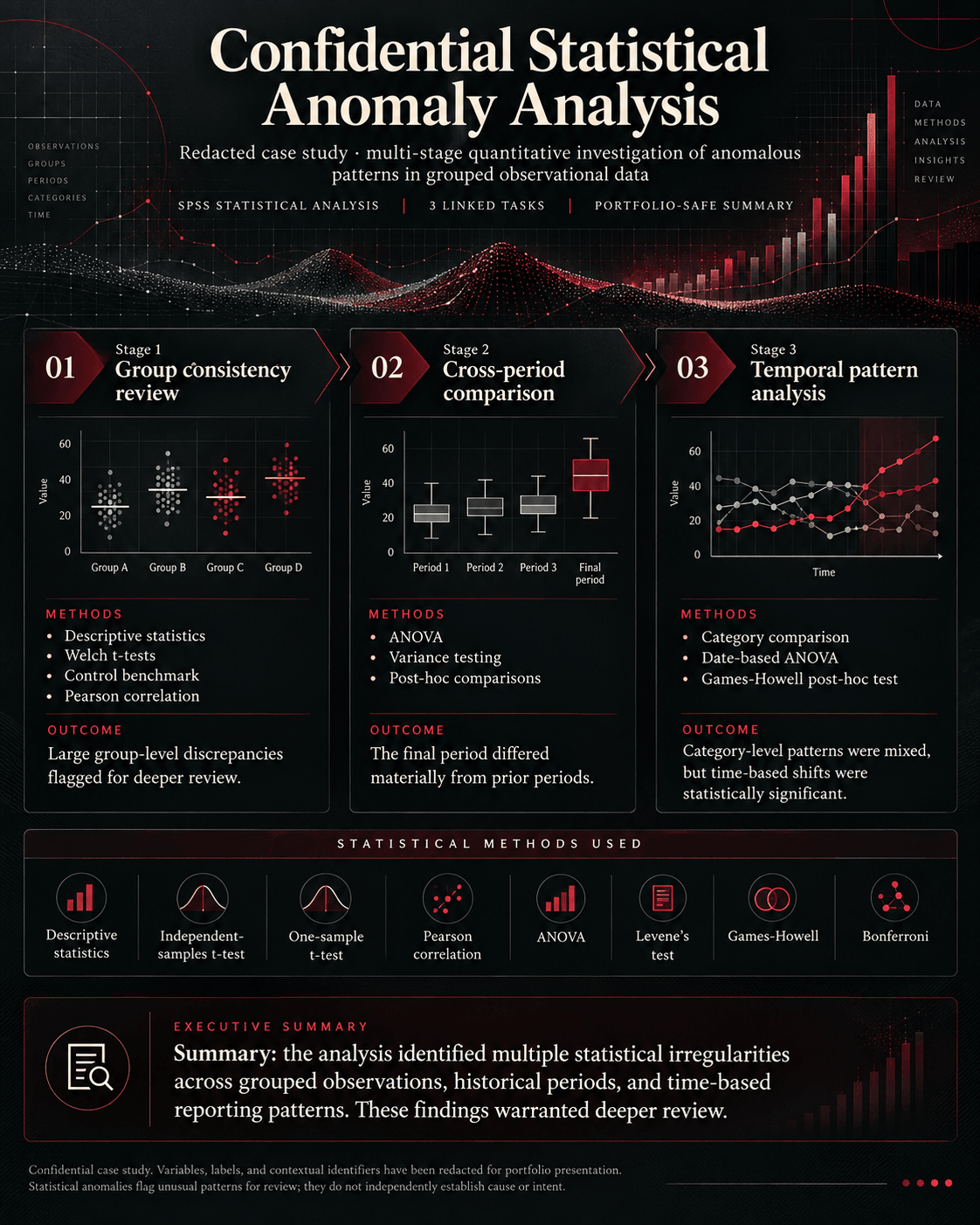
A multi-stage quantitative review of grouped observational data, designed to find patterns that warrant a closer look. Presented in redacted form.
- Organization context
- FBI · Contributed data & statistical analysis to project work
- Role
- Data and statistical analysis contributed to project work.
- Type
- Professional work
- Status
- Completed analysis · redacted
- Tools
- SPSS · t-tests · ANOVA · Games-Howell · Pearson correlation
- Design
- 3 linked stages
- Data
- Grouped observations
- Software
- SPSS
- Output
- Review flags
Case study
01Context
Redacted by design
Variables, labels and contextual identifiers are removed for public presentation. Groups, periods and categories are shown generically; no source material is published.
02Stage 1
Group comparison
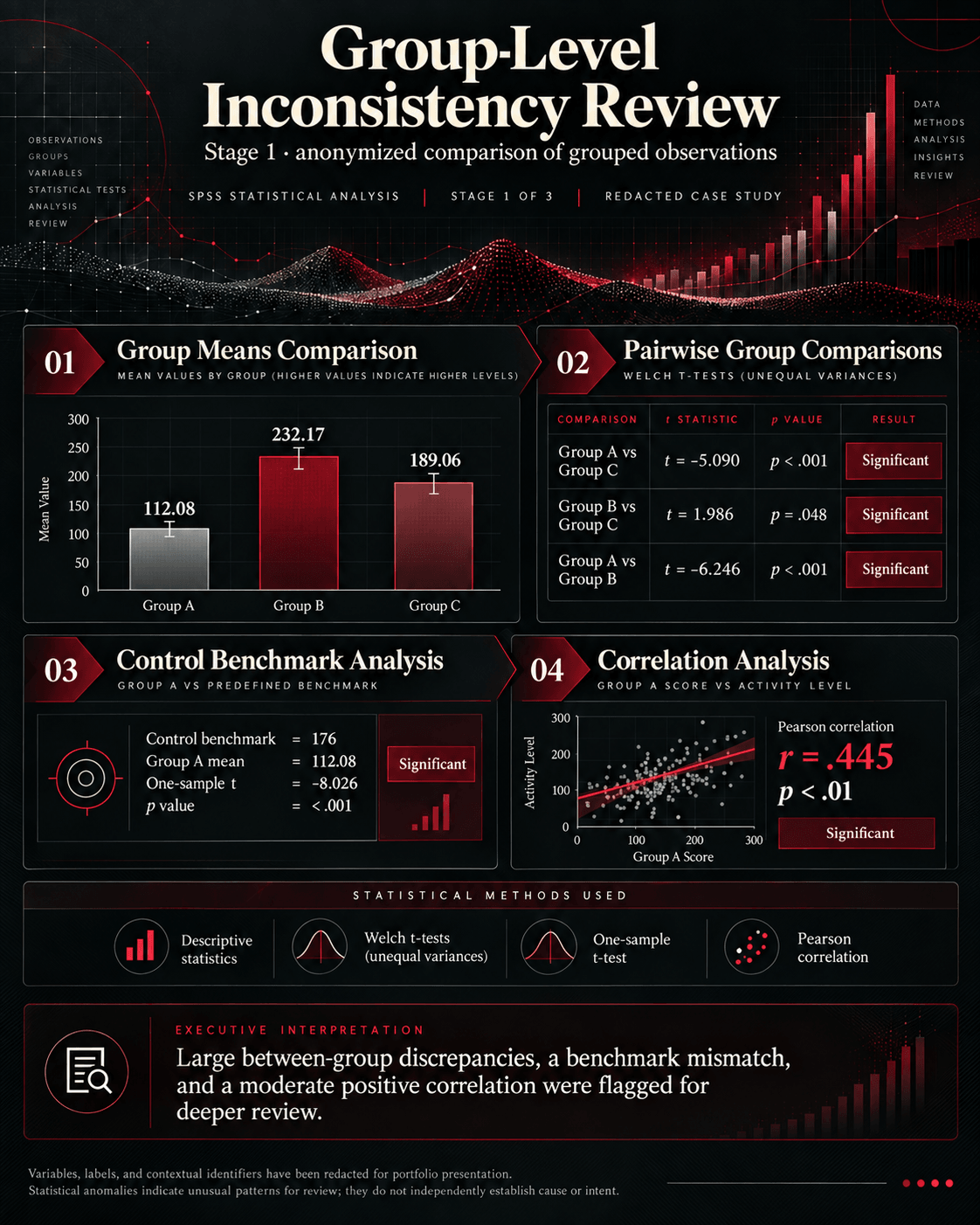
Descriptive statistics, Welch t-tests, a one-sample test against a benchmark and correlation analysis compared the groups. Large between-group differences were flagged for deeper review.
View full size: Stage 1 · Group comparison (opens in a new tab)
03Stage 2
Cross-period comparison
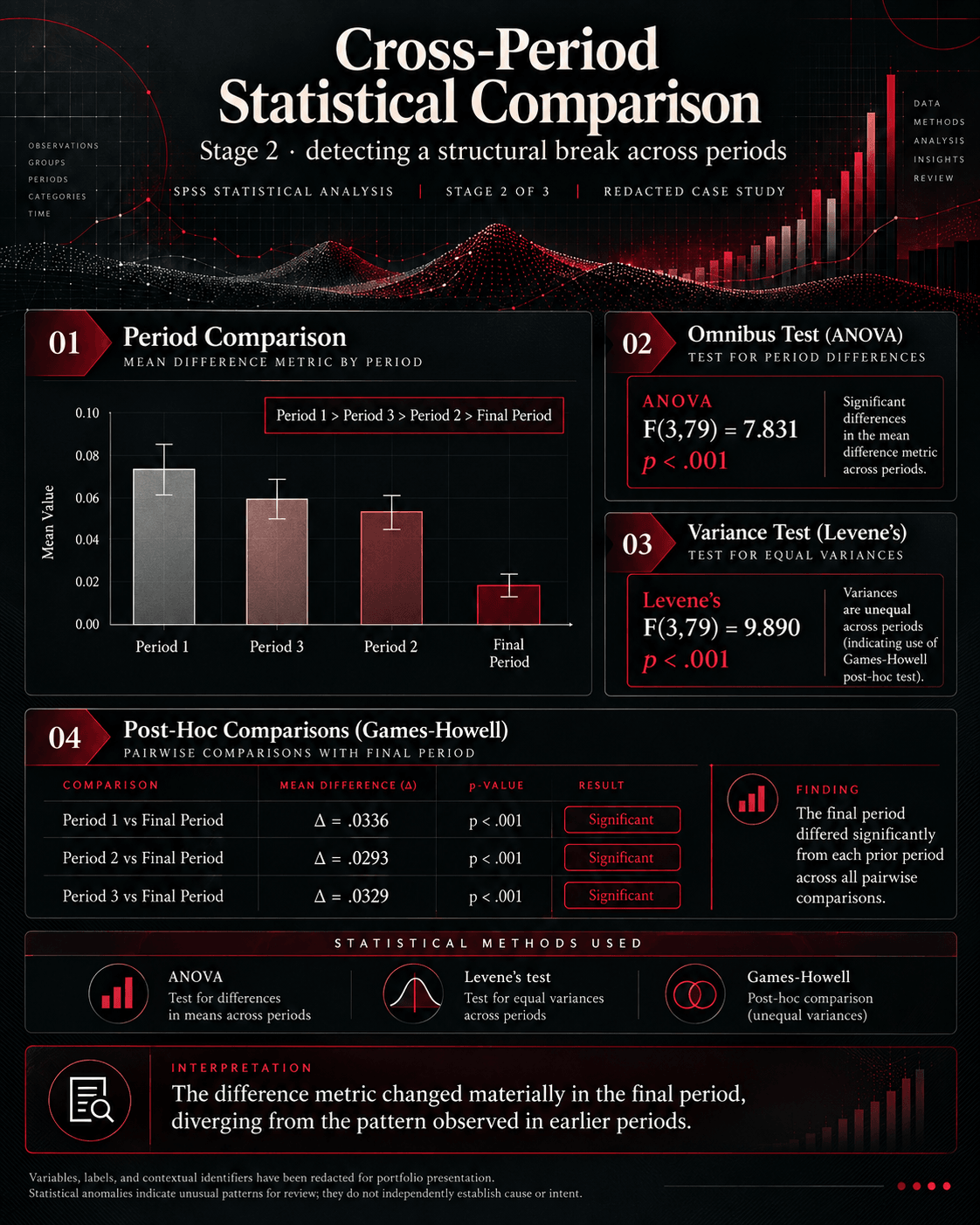
ANOVA with Levene's test and Games-Howell post-hoc comparisons tested whether the final period differed from earlier ones. It differed significantly from each.
View full size: Stage 2 · Cross-period comparison (opens in a new tab)
04Stage 3
Categories versus time
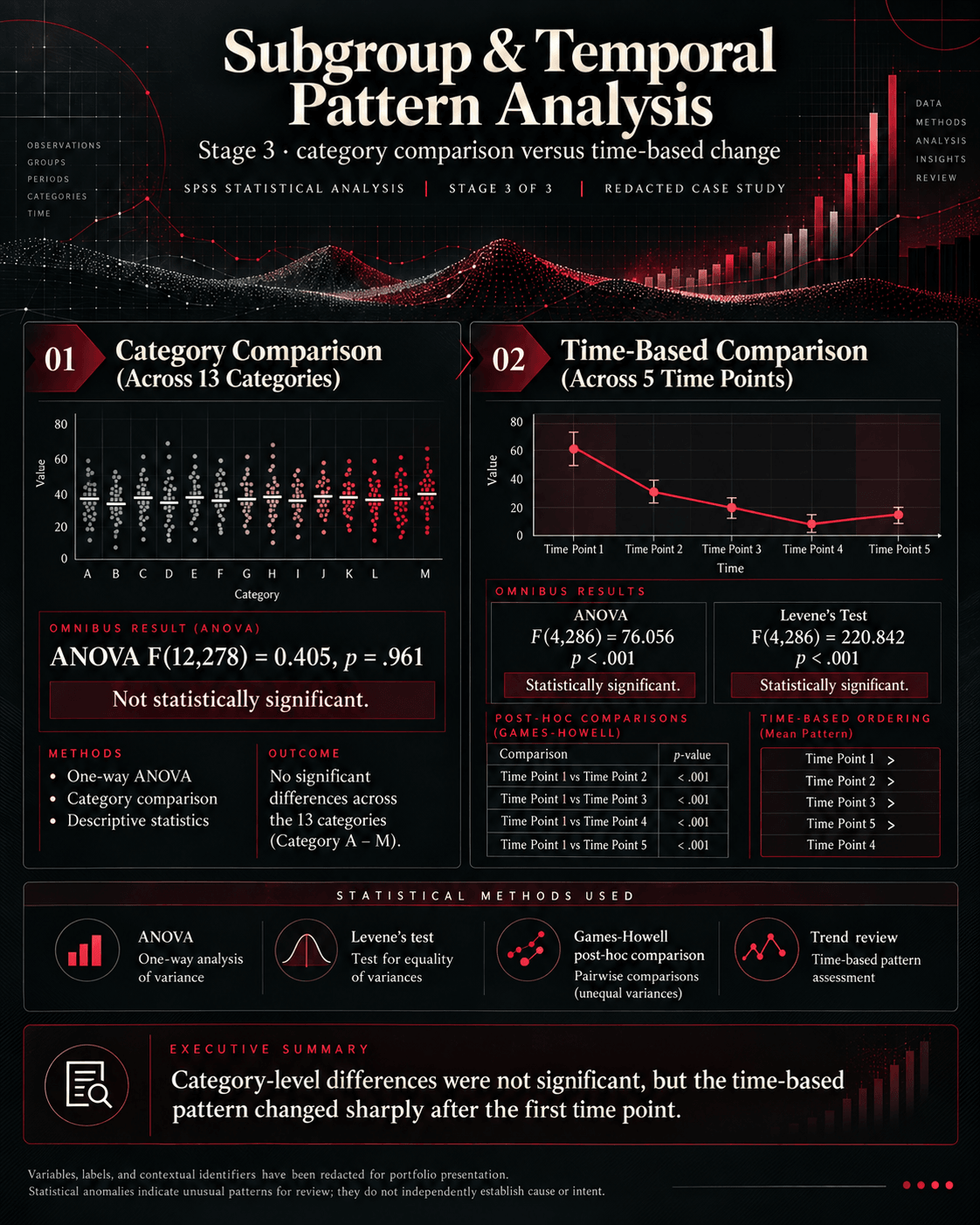
Differences across categories were not significant; differences across time points were, with the largest shift after the first time point.
View full size: Stage 3 · Temporal patterns (opens in a new tab)
05Review flags
What the analysis can and cannot say
- It flags unusual patterns and isolates the periods that need review.
- It does not determine cause or identify intent.
- It does not replace a full investigation.
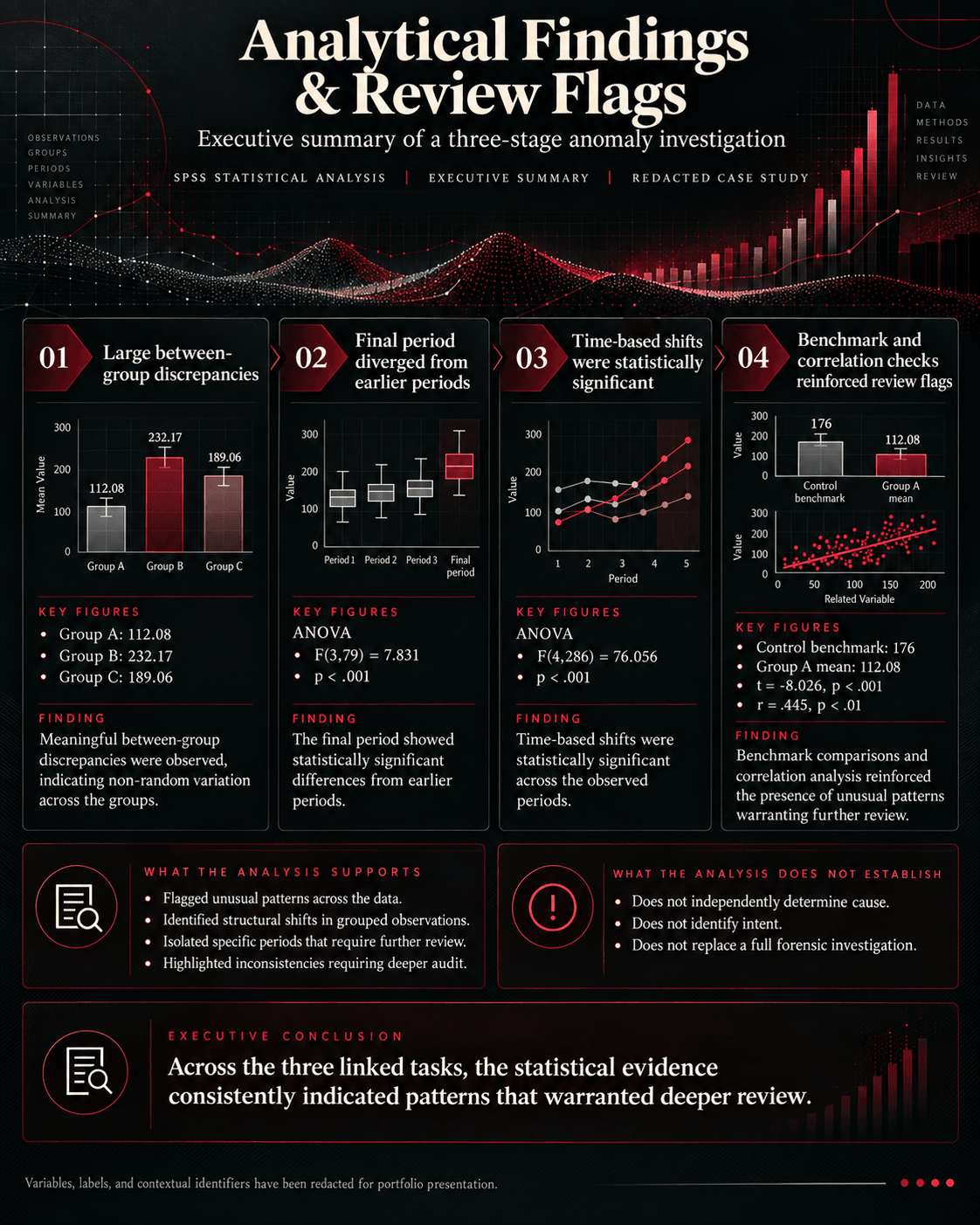
View full size: Findings and review flags (opens in a new tab)