Organization & researchSPSS · Survey research
Cybersecurity Awareness & Training Research
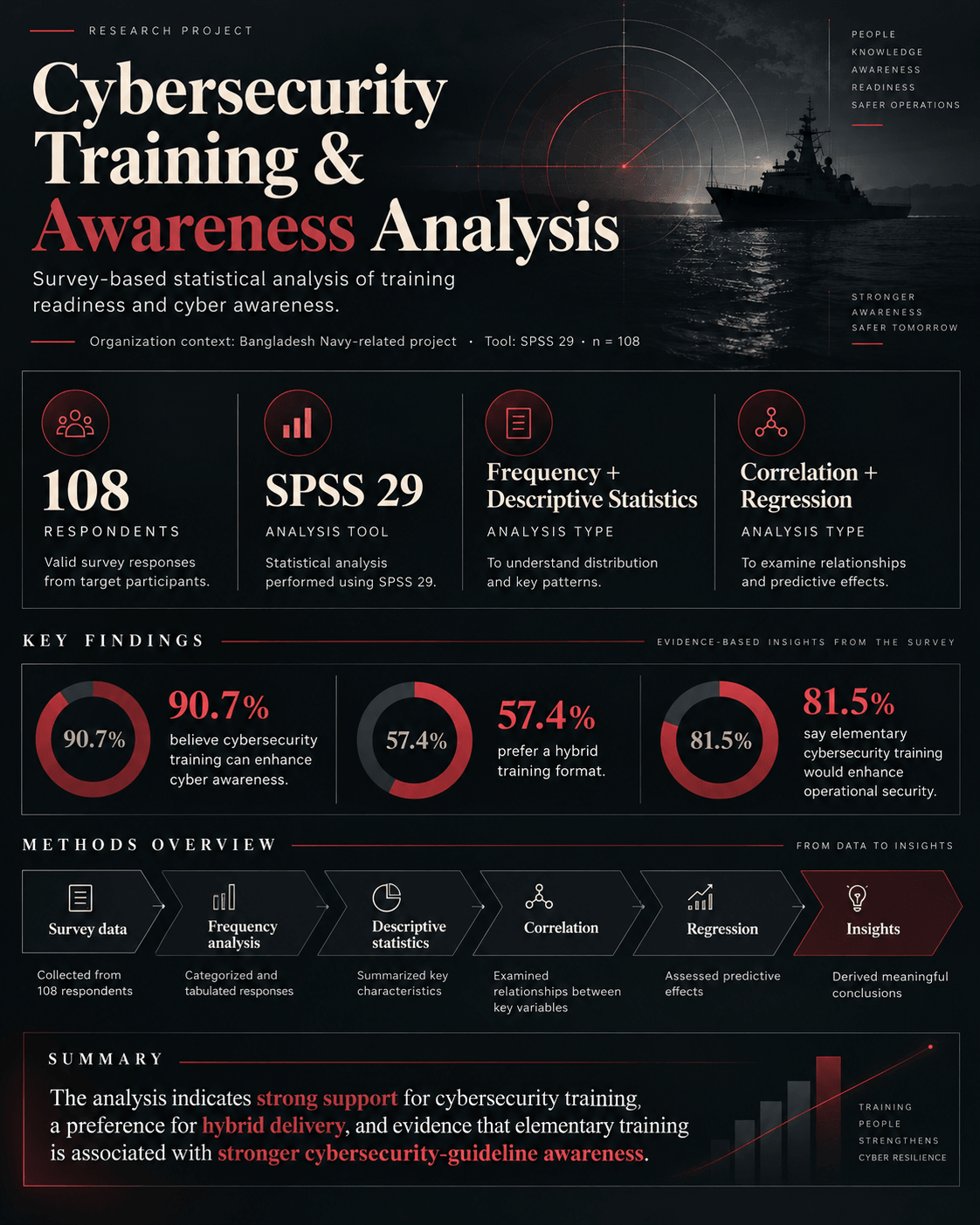
How ready are personnel for cybersecurity training, what do they want from it, and how does support for training relate to awareness? A survey study of 108 respondents.
- Organization context
- Bangladesh Navy · Contributed data & research analysis
- Role
- Data and research analysis in SPSS.
- Type
- Professional work
- Status
- Completed analysis
- Tools
- SPSS 29.0.1 · Frequency analysis · Correlation · Simple regression
- Respondents
- 108
- Software
- SPSS 29.0.1
- Analysis
- Descriptive · correlation · regression
- Design
- Survey
Case study
01Preferences
Clear support for training
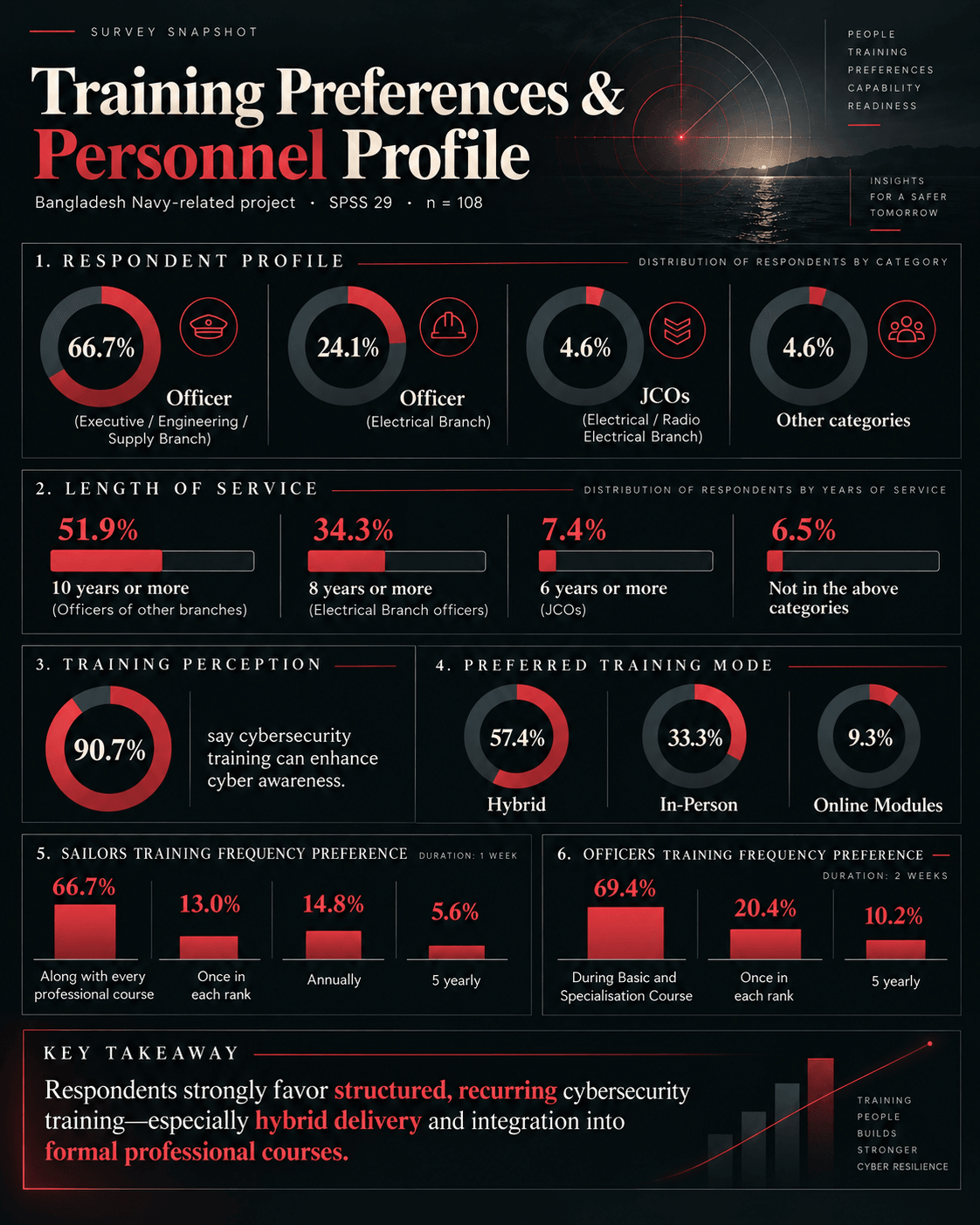
90.7% believed training can enhance cybersecurity awareness, 81.5% said elementary training would enhance operational security and 57.4% preferred a hybrid format. Sailors mostly favored training alongside every professional course (66.7%); officers favored the Basic and Specialisation courses (69.4%).
02Readiness
Where the gaps are
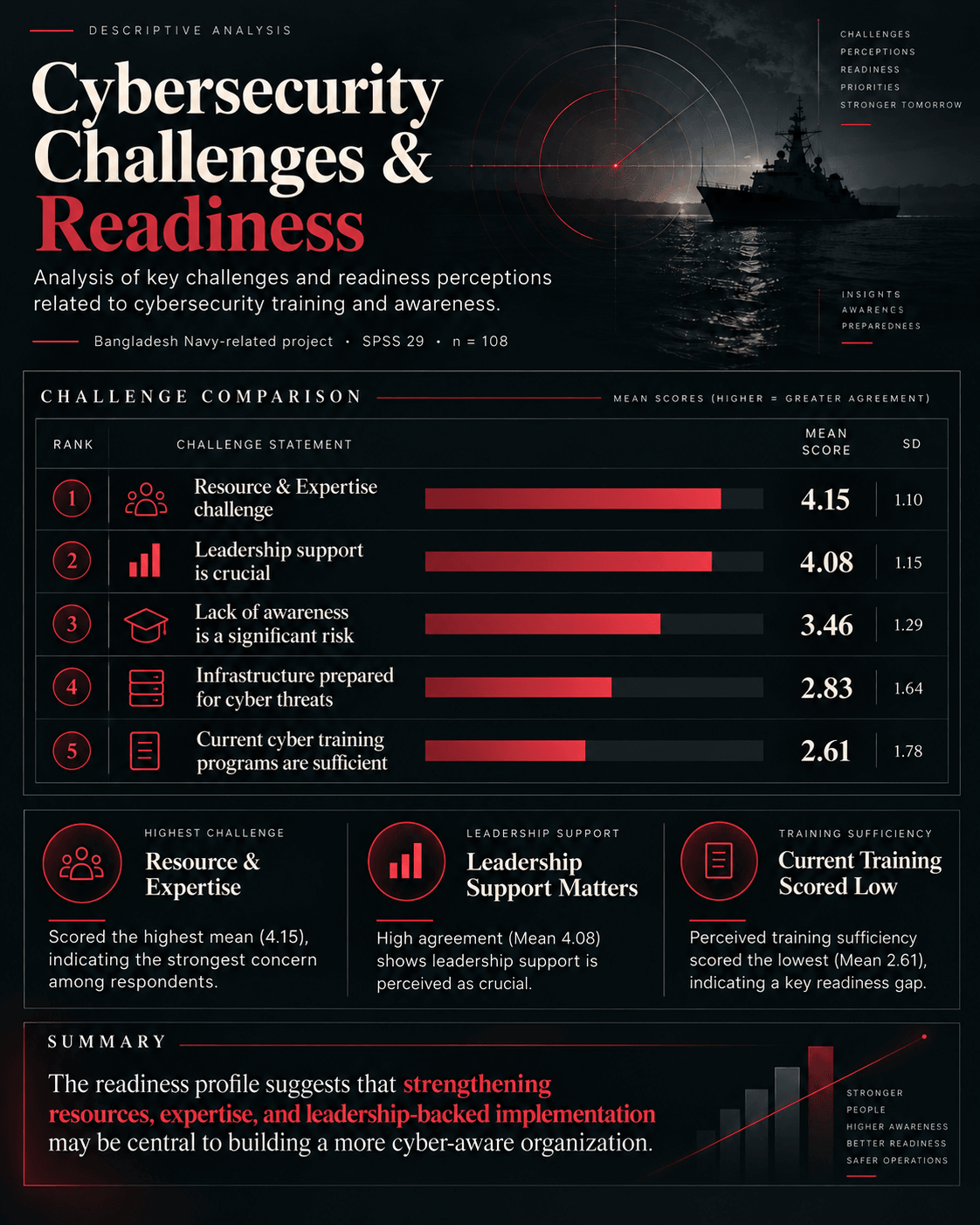
Resource and expertise challenges (M = 4.15) and the importance of leadership support (M = 4.08) scored highest. The sufficiency of current programs (M = 2.61) and infrastructure preparedness (M = 2.83) scored lowest.
View full size: Challenges and readiness (opens in a new tab)
03Awareness
Skills lag behind intent
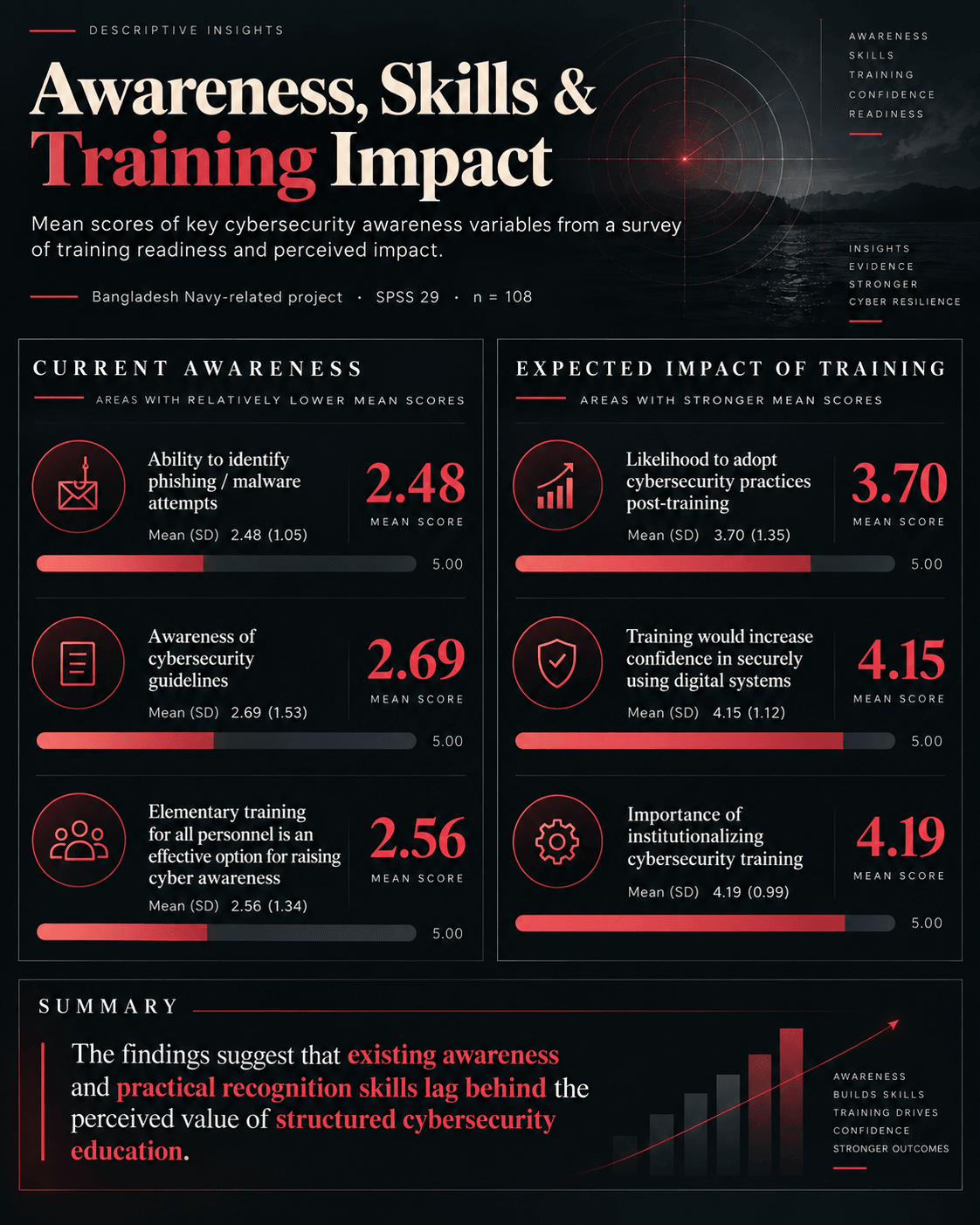
Confidence in identifying phishing or malware was low (M = 2.48), while institutionalizing training (M = 4.19) and training's effect on confidence (M = 4.15) scored high.
04Relationship
Support for training and awareness
Support for elementary training was positively associated with awareness of cybersecurity guidelines (r = .604, p < .001). In a simple regression it explained 36.5% of the variance (R² = .365; F(1,106) = 60.861, p < .001; B = .690, β = .604, t = 7.801). The relationship is predictive, not causal.
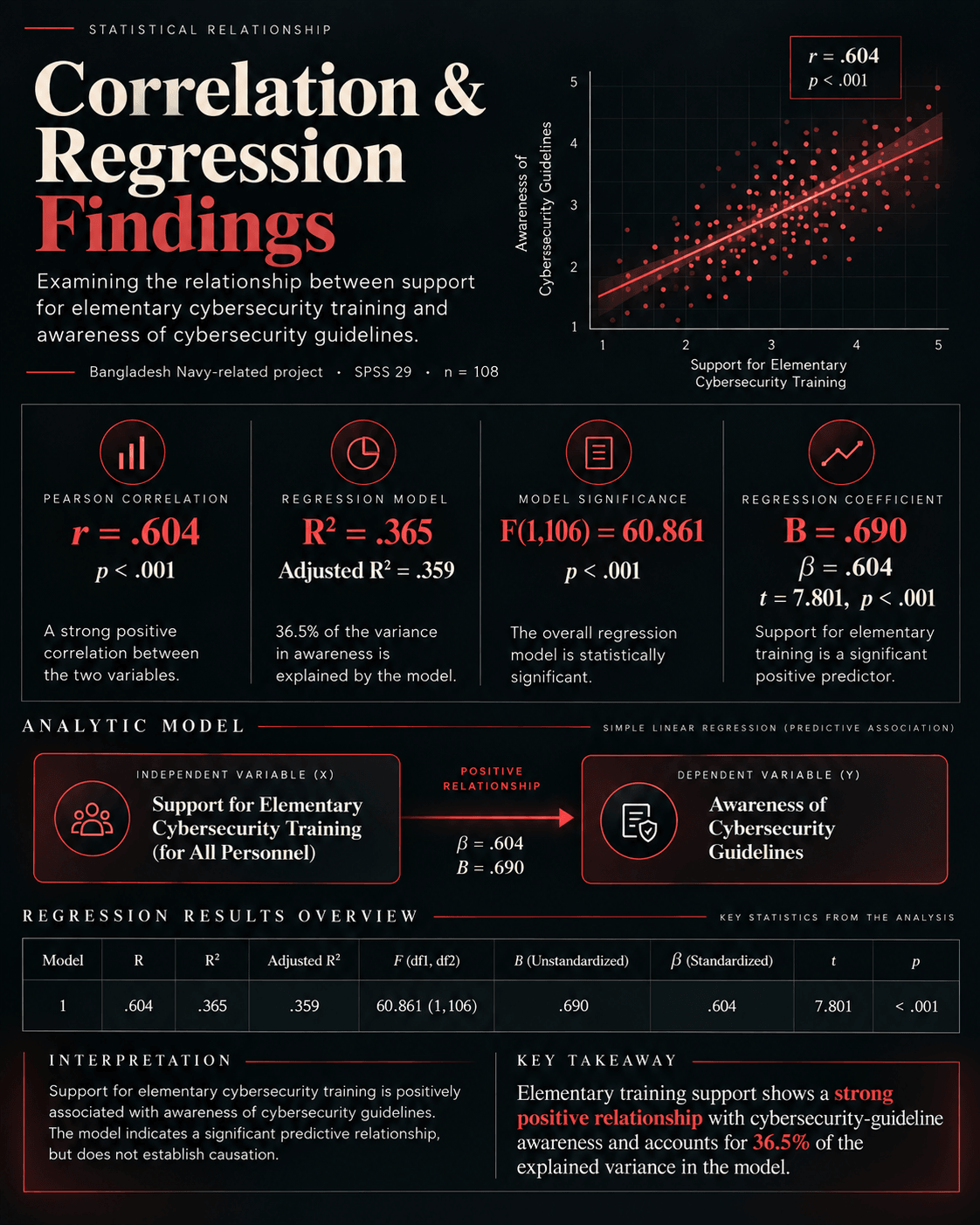
View full size: Correlation and regression (opens in a new tab)