Data Science & AnalyticsSPSS · Regression analysis
Online Shopping Behavior Analysis
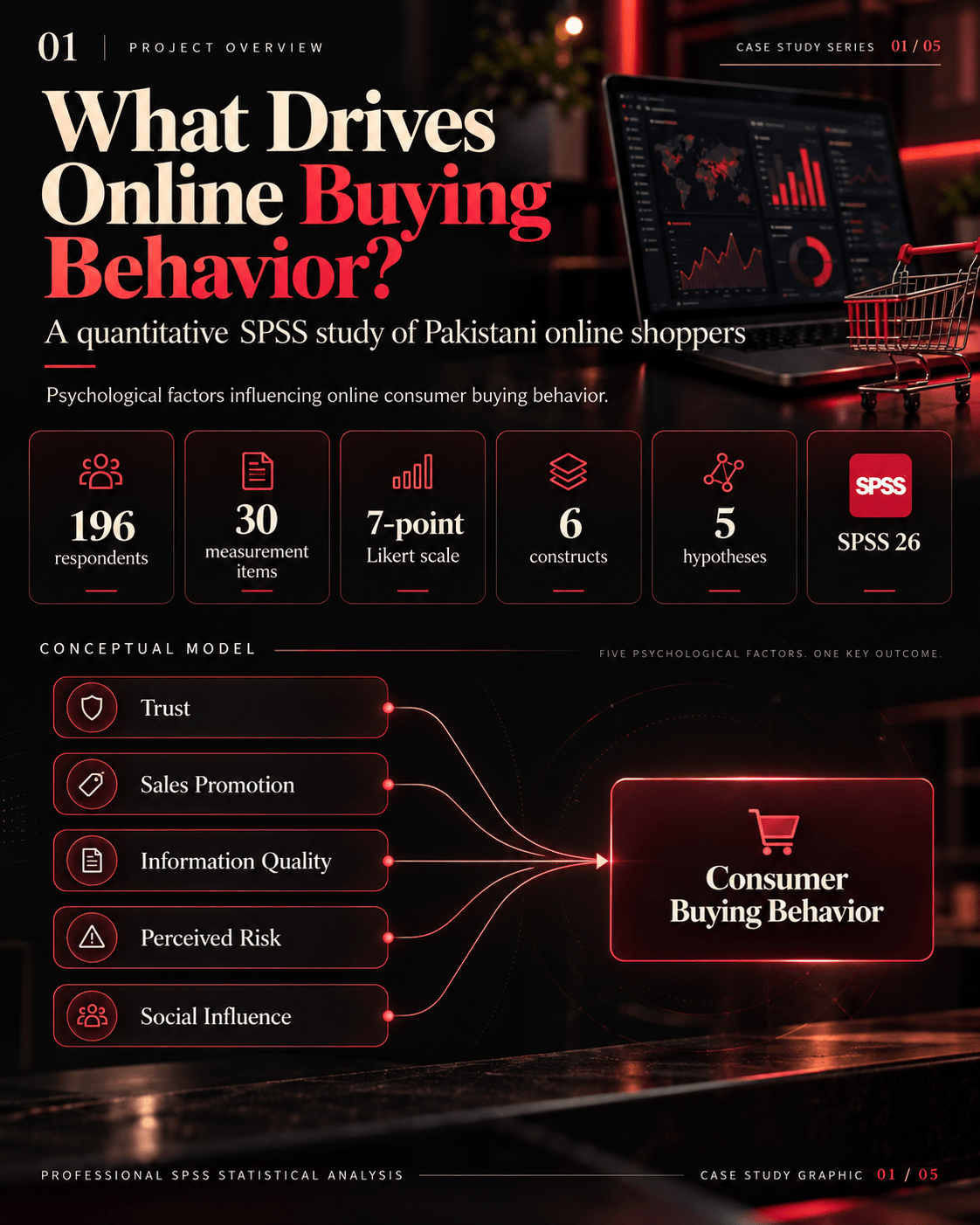
Which psychological factors actually move online buying behavior? A survey study of 196 online shoppers in Pakistan, analyzed in SPSS.
- Role
- Statistical analysis in SPSS: reliability and validity checks, diagnostics, multiple regression and hypothesis decisions.
- Type
- Professional work
- Status
- Completed analysis
- Tools
- SPSS 26 · Multiple regression · Reliability analysis
- Respondents
- 196
- Constructs
- 6 · 30 items
- Scale
- 7-point Likert
- Software
- SPSS 26
Case study
01Question
Five factors, one outcome
The study tested trust, sales promotion, information quality, perceived risk and social influence as predictors of consumer buying behavior.
02Method
From survey to model
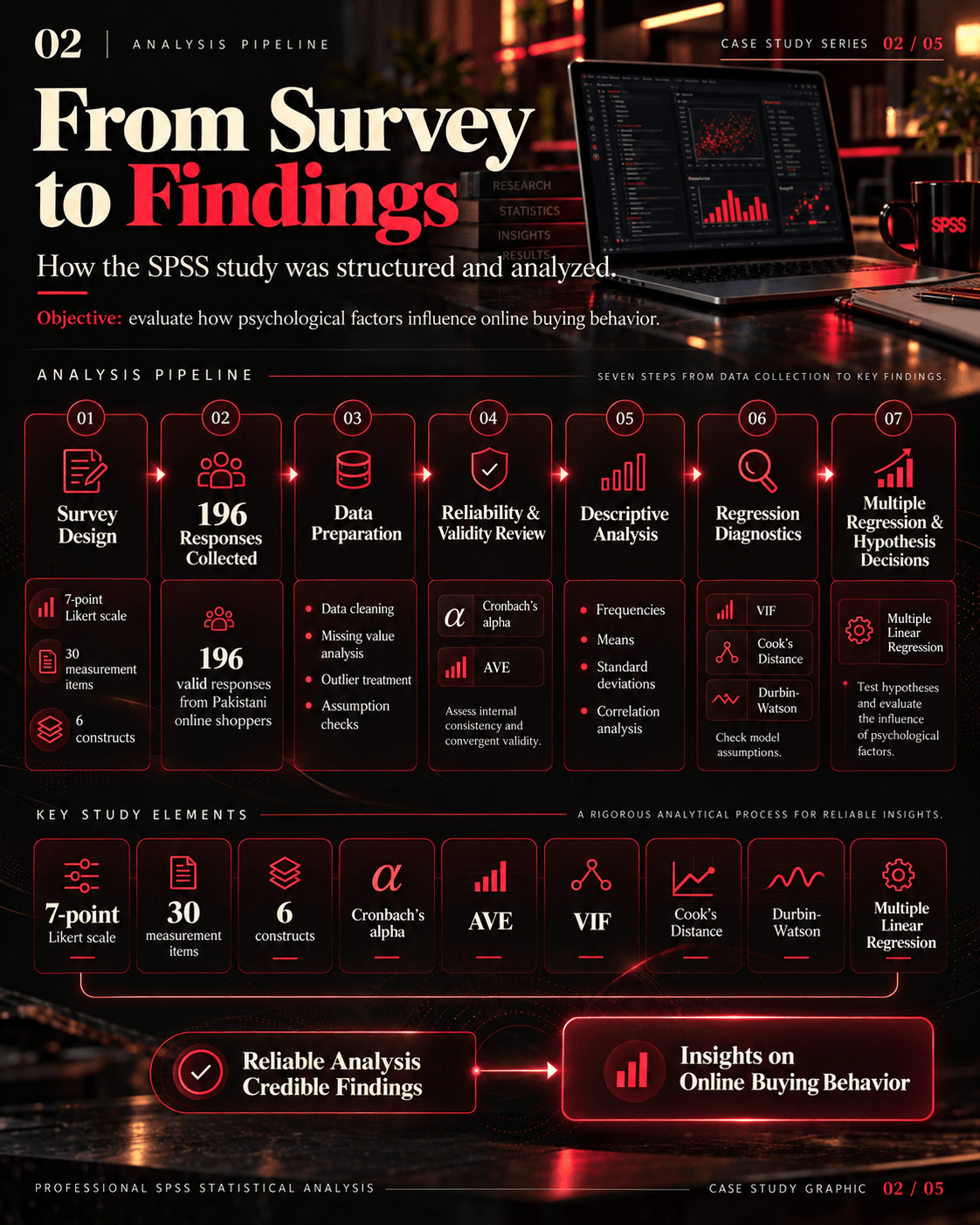
- Data preparation and assumption checks
- Reliability (Cronbach's alpha) and convergent validity (AVE)
- Descriptive and correlation analysis
- Multiple linear regression with VIF, Cook's distance and Durbin–Watson diagnostics
03Measurement
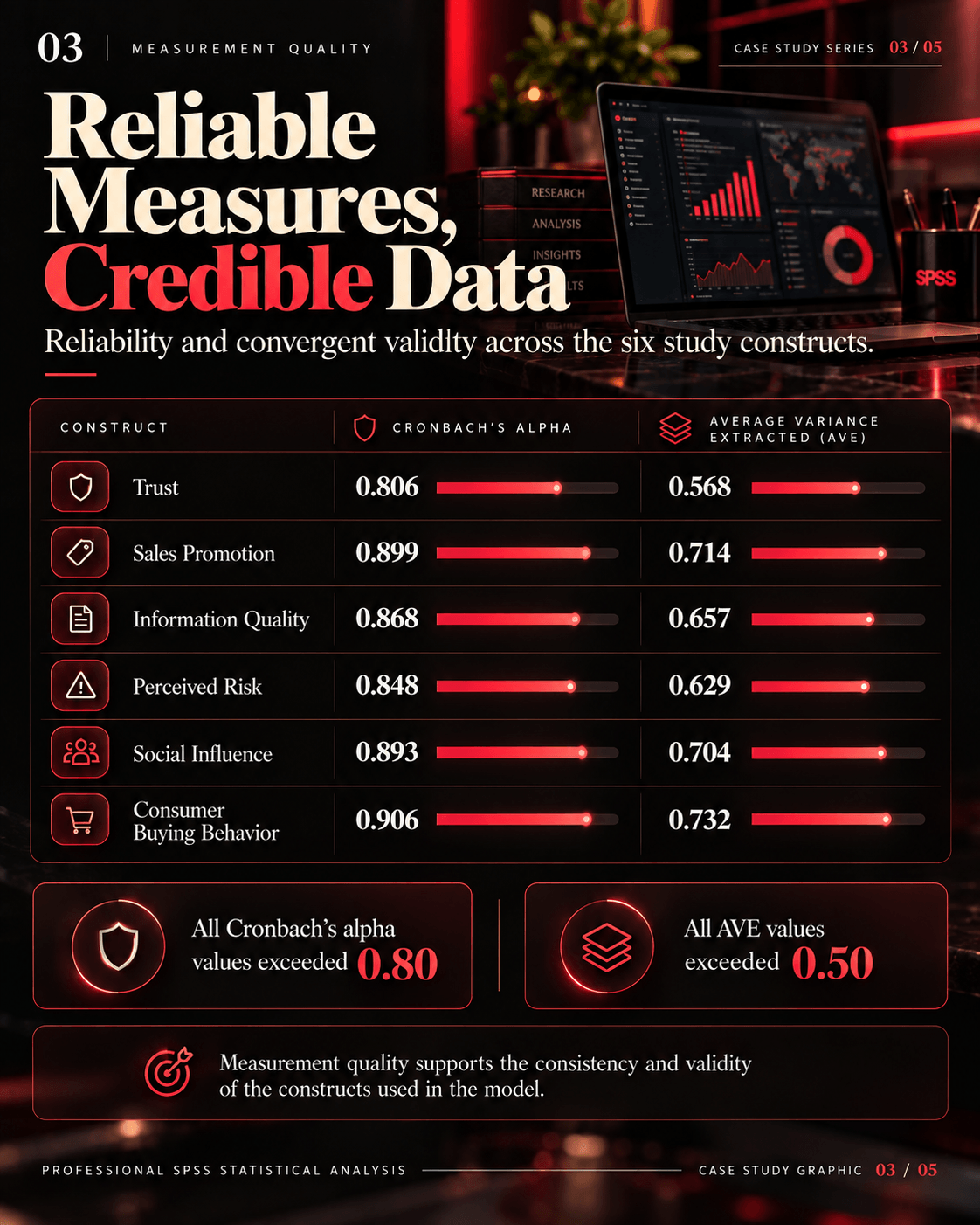
Reliable constructs
Cronbach's alpha ranged from .806 to .906 and AVE from .568 to .732 across the six constructs.
04Findings
Information quality led
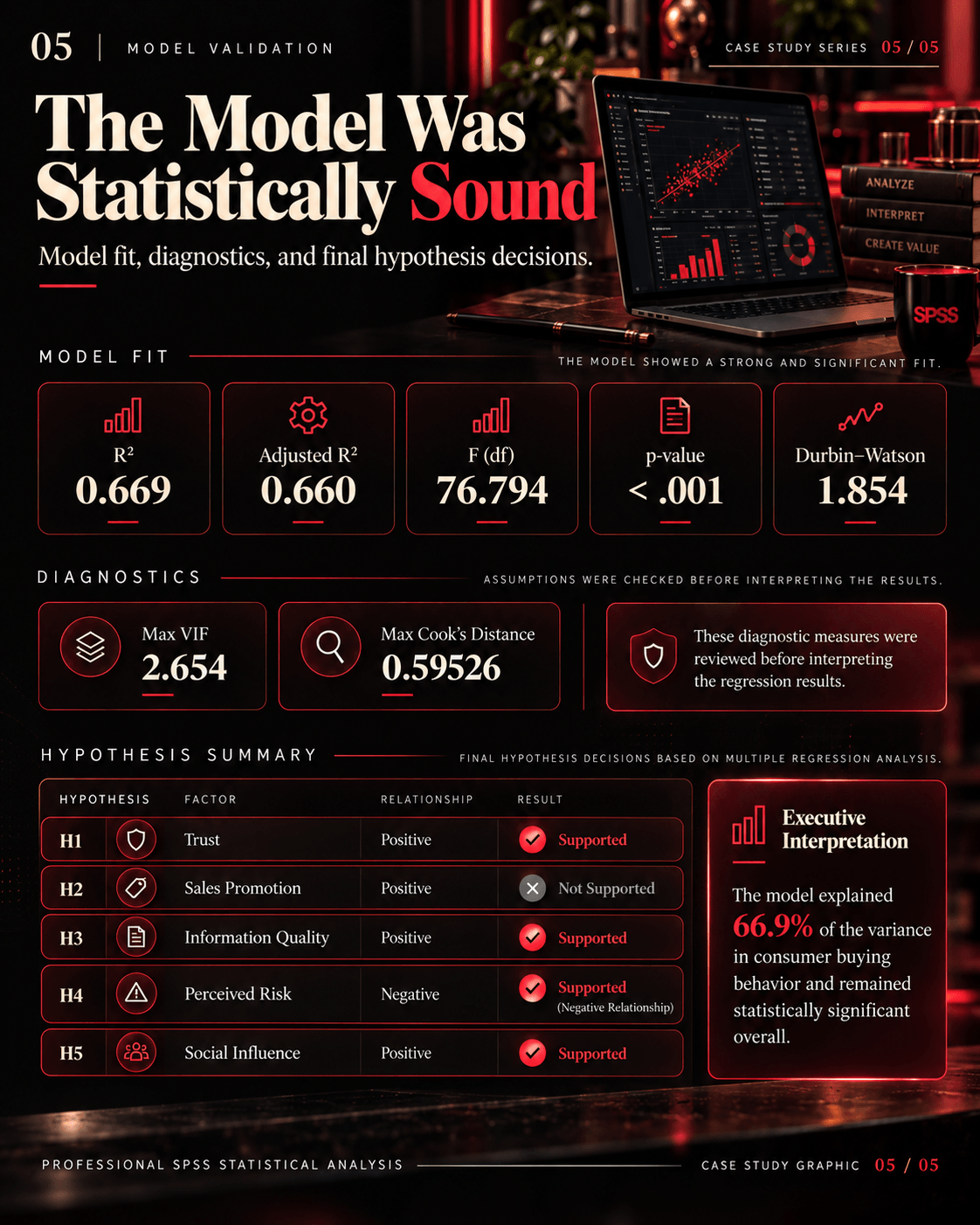
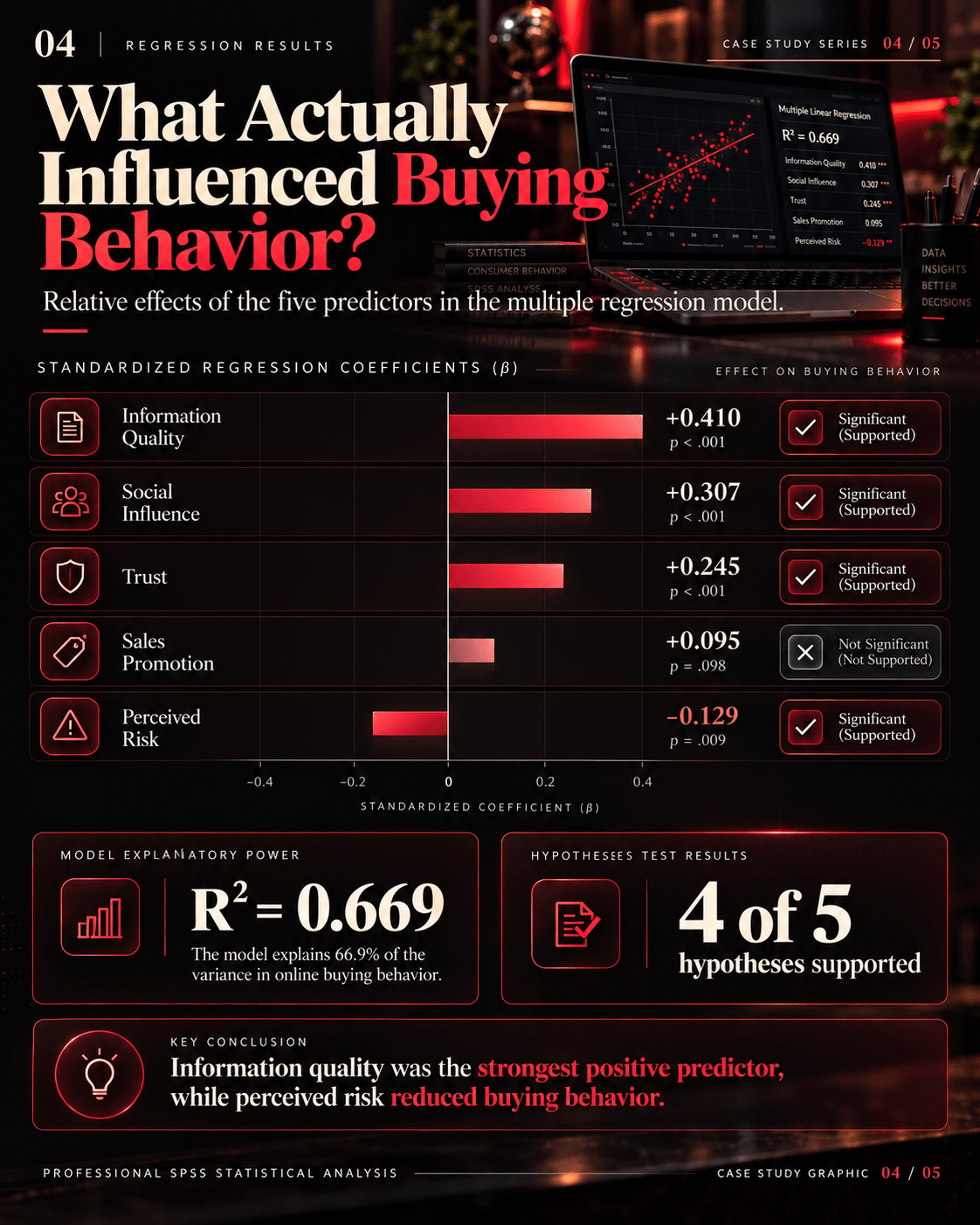
The model explained 66.9% of the variance in buying behavior (R² = .669, adjusted R² = .660; F(5,190) = 76.794, p < .001). Information quality (β = .410), social influence (β = .307) and trust (β = .245) were positive predictors, and perceived risk was negative (β = −.129, p = .009). Sales promotion was not significant at conventional levels (β = .095, p = .098).
05Validation
Diagnostics before conclusions
Maximum VIF (2.654), maximum Cook's distance (.595) and Durbin–Watson (1.854) were reviewed before the results were interpreted. The model describes associations in this sample; it does not establish cause.