Data Science & AnalyticsPython · Research support
AI Adoption in Marketing
The Mediating Role of Perception
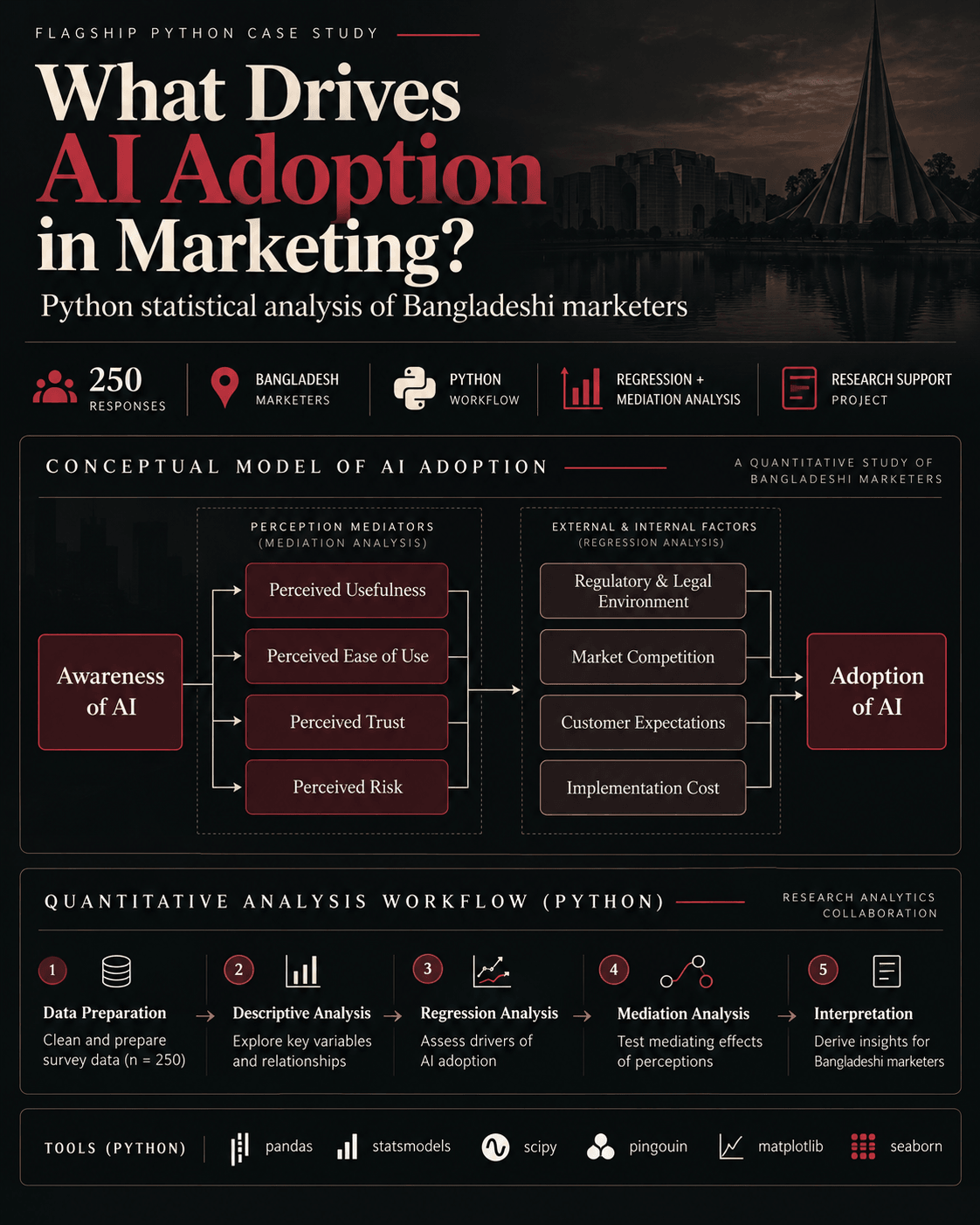
A research analytics collaboration: statistical analysis in Python for a study of what drives AI adoption among marketers, and how perception mediates the path from awareness to adoption.
- Role
- Research analytics collaboration: resources, analytical support and statistical assistance. The associated report was written by another researcher.
- Type
- Professional work
- Status
- Completed analysis
- Tools
- Python · pandas · statsmodels · Pingouin · matplotlib · seaborn
- Respondents
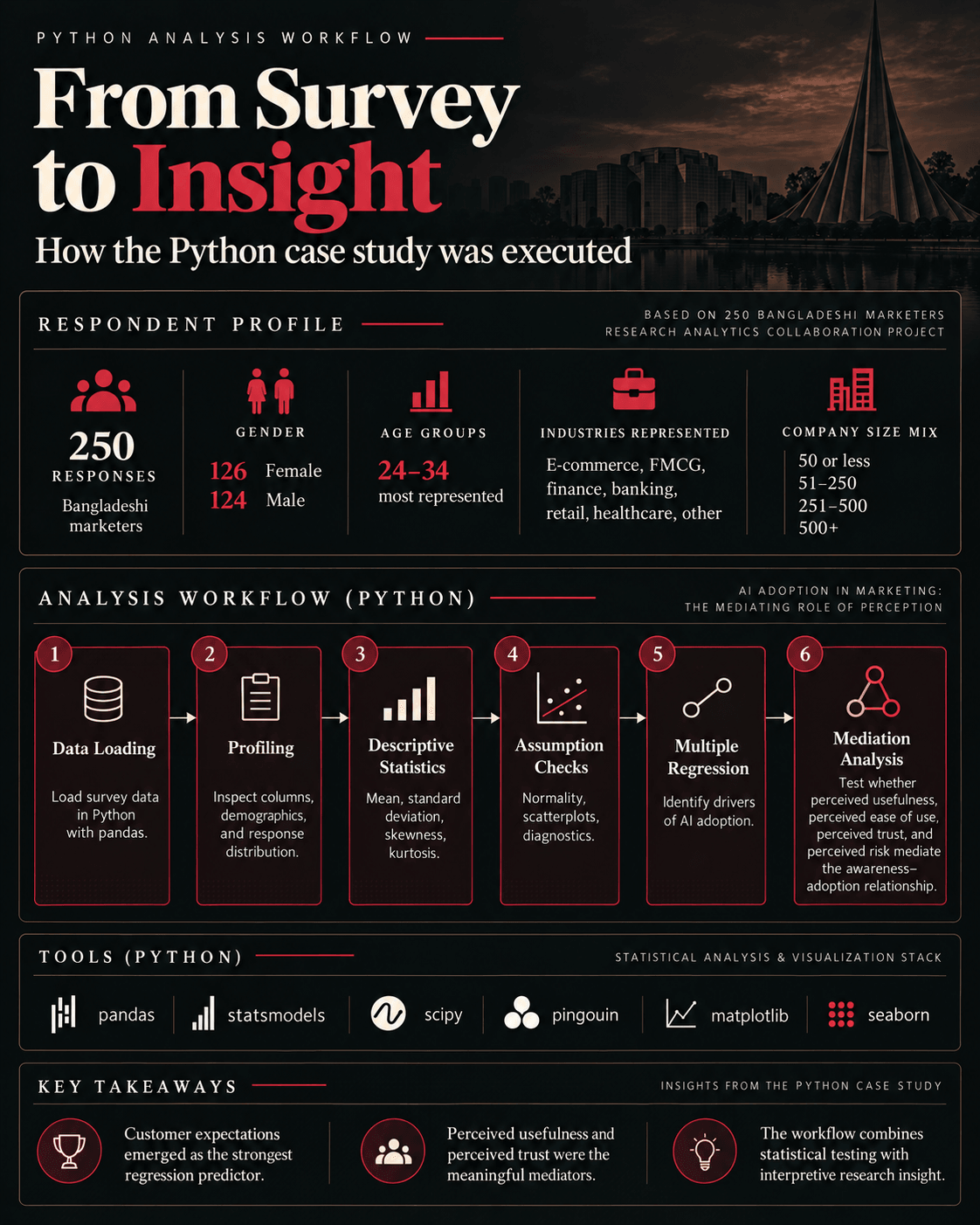
- 250 marketers
- Methods
- OLS · mediation
- Language
- Python
- Project type
- Research support
Case study
01Question
Drivers, and the role of perception
Two questions: which organizational and market factors predict AI adoption, and do perceptions of AI (usefulness, ease of use, trust, risk) mediate the relationship between awareness and adoption?
02Workflow
A reproducible Python pipeline
- Data preparation and profiling with pandas
- Descriptive statistics and normality checks
- Correlation analysis and scatterplots
- OLS regression with statsmodels
- Mediation analysis with Pingouin
- Visualization with matplotlib and seaborn
03Regression
Customer expectations led
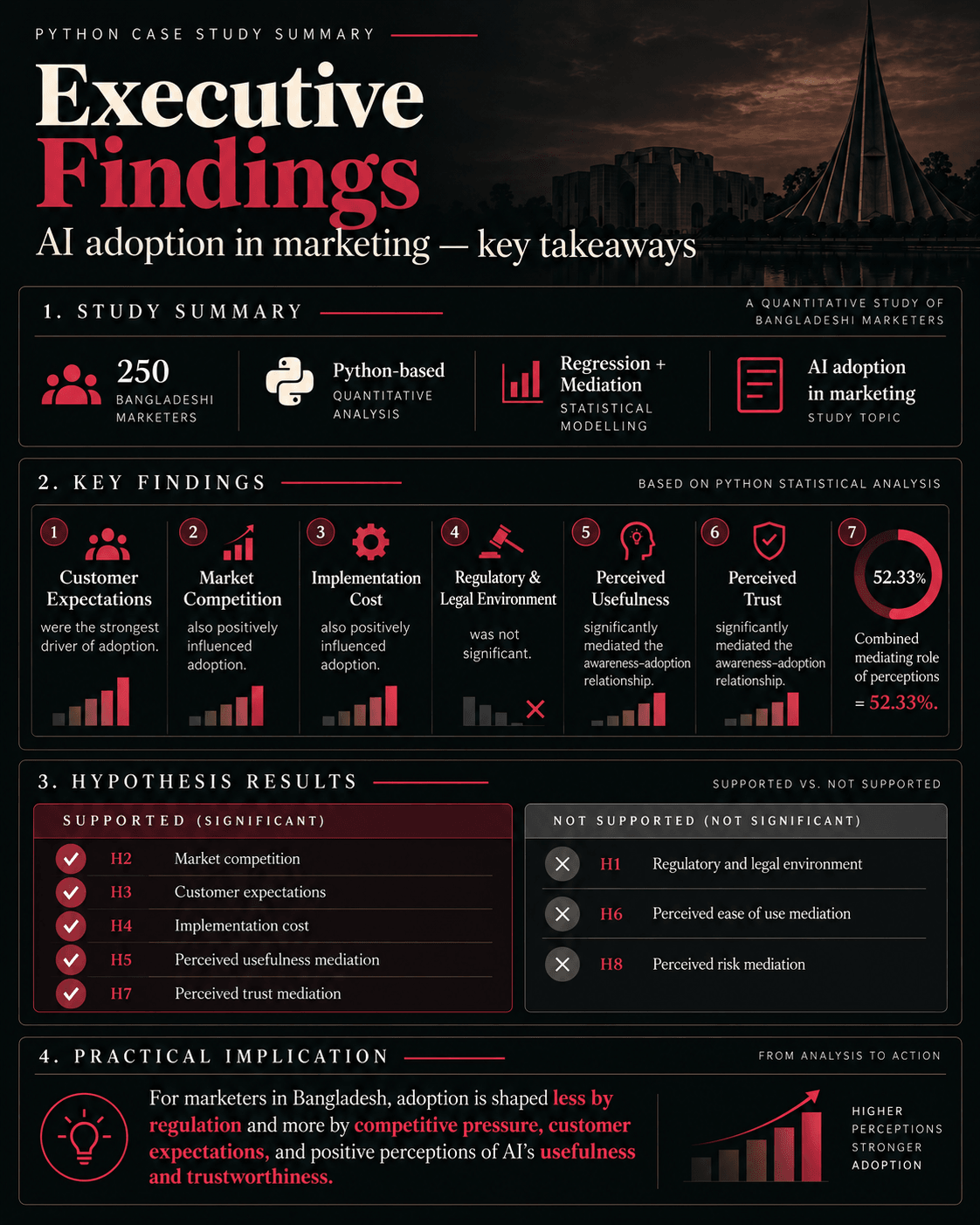
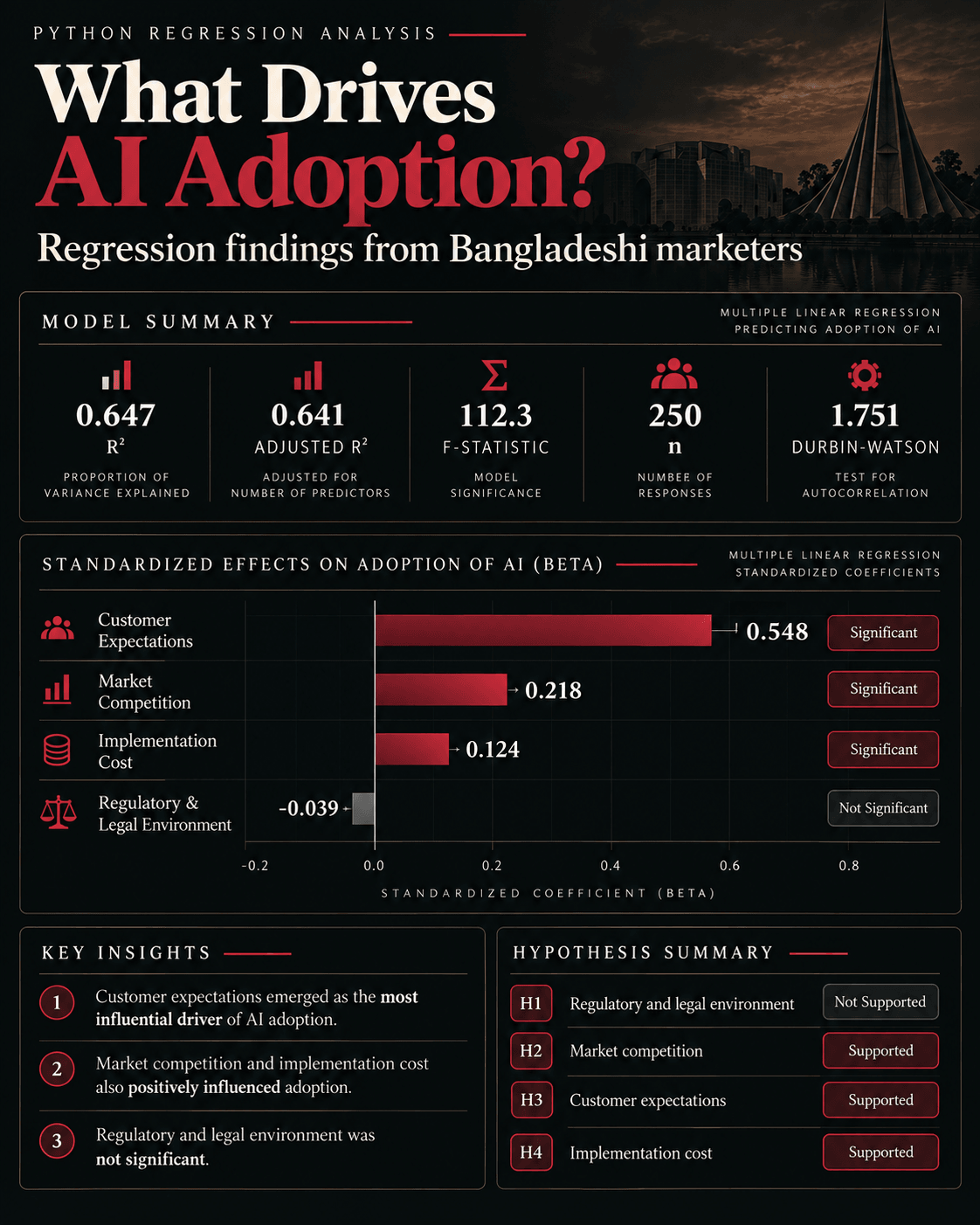
The model explained 64.7% of the variance in adoption (R² = .647, adjusted R² = .641; F = 112.3; Durbin–Watson = 1.751). Customer expectations (β = .548) were the strongest predictor, followed by market competition (β = .218) and implementation cost (β = .124), all p ≤ .004. The regulatory and legal environment was not significant (β = −.039, p = .422).
04Mediation
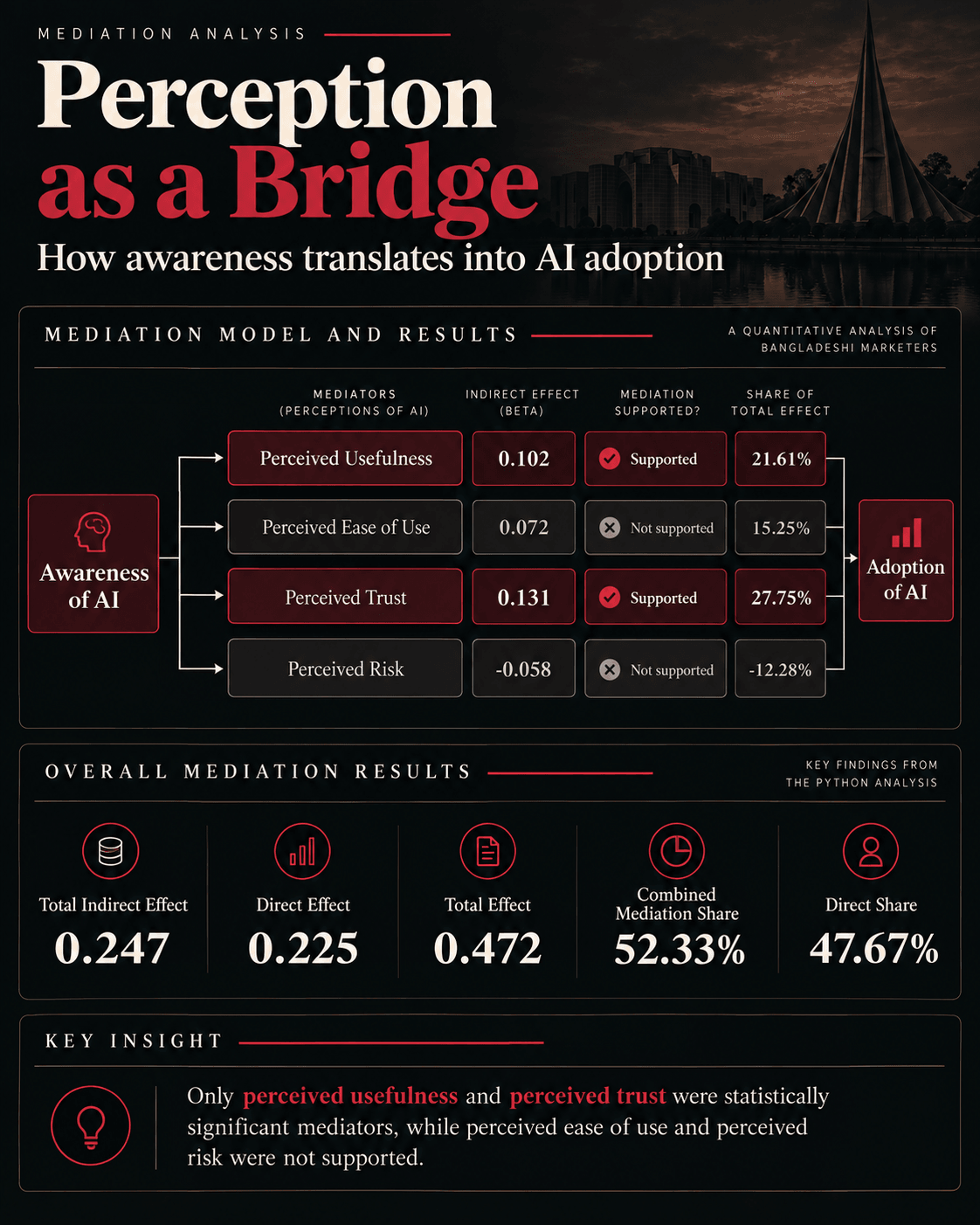
Usefulness and trust carried the effect
Perceived usefulness (indirect effect .102, about 21.6% of the total) and trust (.131, about 27.8%) mediated the awareness–adoption relationship. Perceived ease of use (.072) and risk (−.058) did not. The total indirect effect was about .247 against a direct effect of about .225.
05Implications
What the evidence supports
Among these marketers, adoption tracked competitive pressure, customer expectations and positive perceptions of AI more than regulation. The data are cross-sectional, so the results describe associations rather than causes.