Data Science & AnalyticsSmartPLS 4 · PLS-SEM
Sustainable Women Entrepreneurial Success
A PLS-SEM study of 600 responses: which conditions build sustainable women entrepreneurial success, and through which pathways their influence travels.
- Role
- PLS-SEM analysis in SmartPLS 4: measurement and structural model assessment, mediation and explanatory power.
- Type
- Professional work
- Status
- Completed analysis
- Tools
- SmartPLS 4 · PLS-SEM · Bootstrapping
- Responses
- 600
- Constructs
- 7
- Indicators
- 36
- Software
- SmartPLS 4
Case study
01Question
What builds sustainable success?
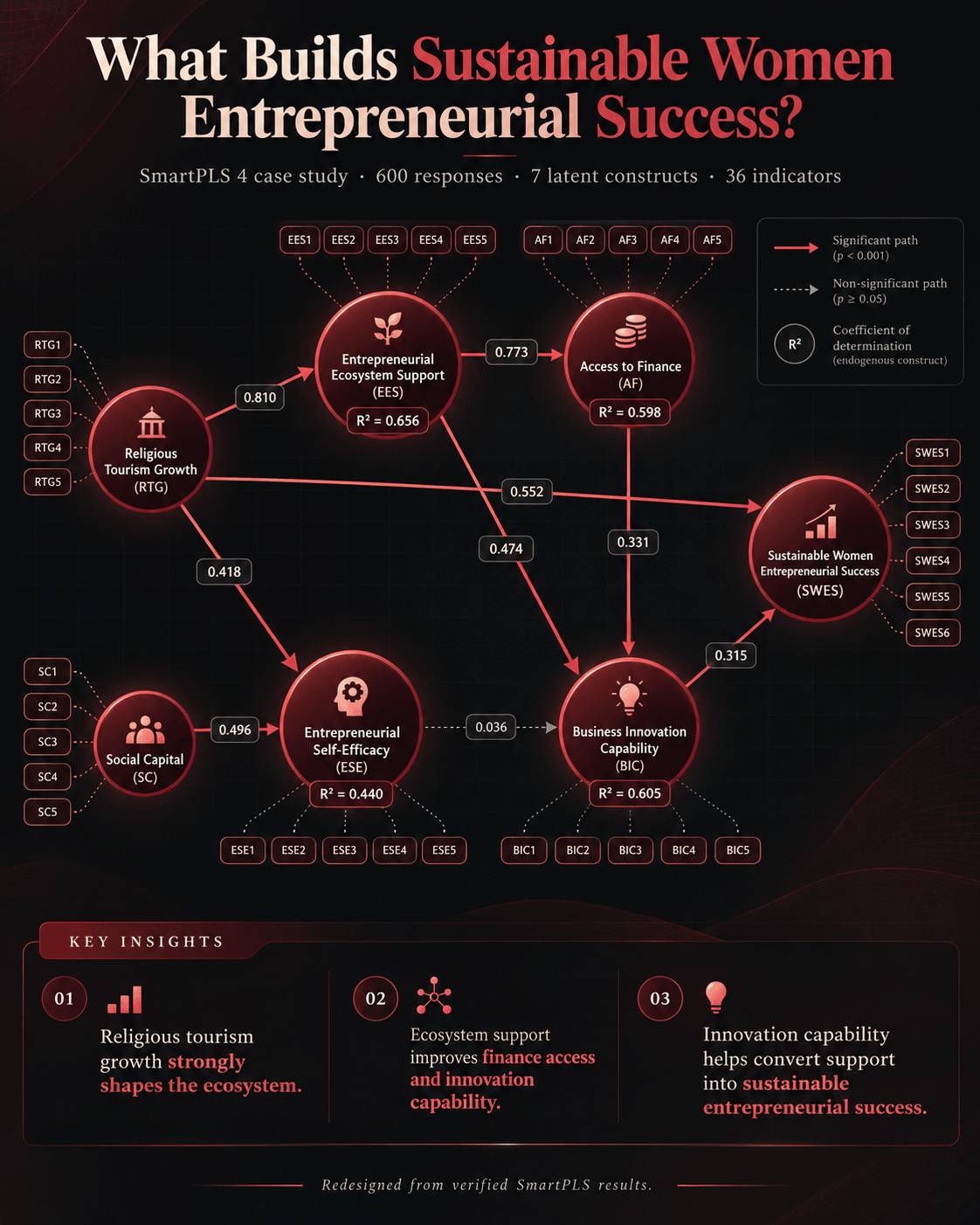
The model links religious tourism growth and social capital to sustainable women entrepreneurial success through entrepreneurial ecosystem support, entrepreneurial self-efficacy, access to finance and business innovation capability.
02Measurement
Reliable measures, read with care
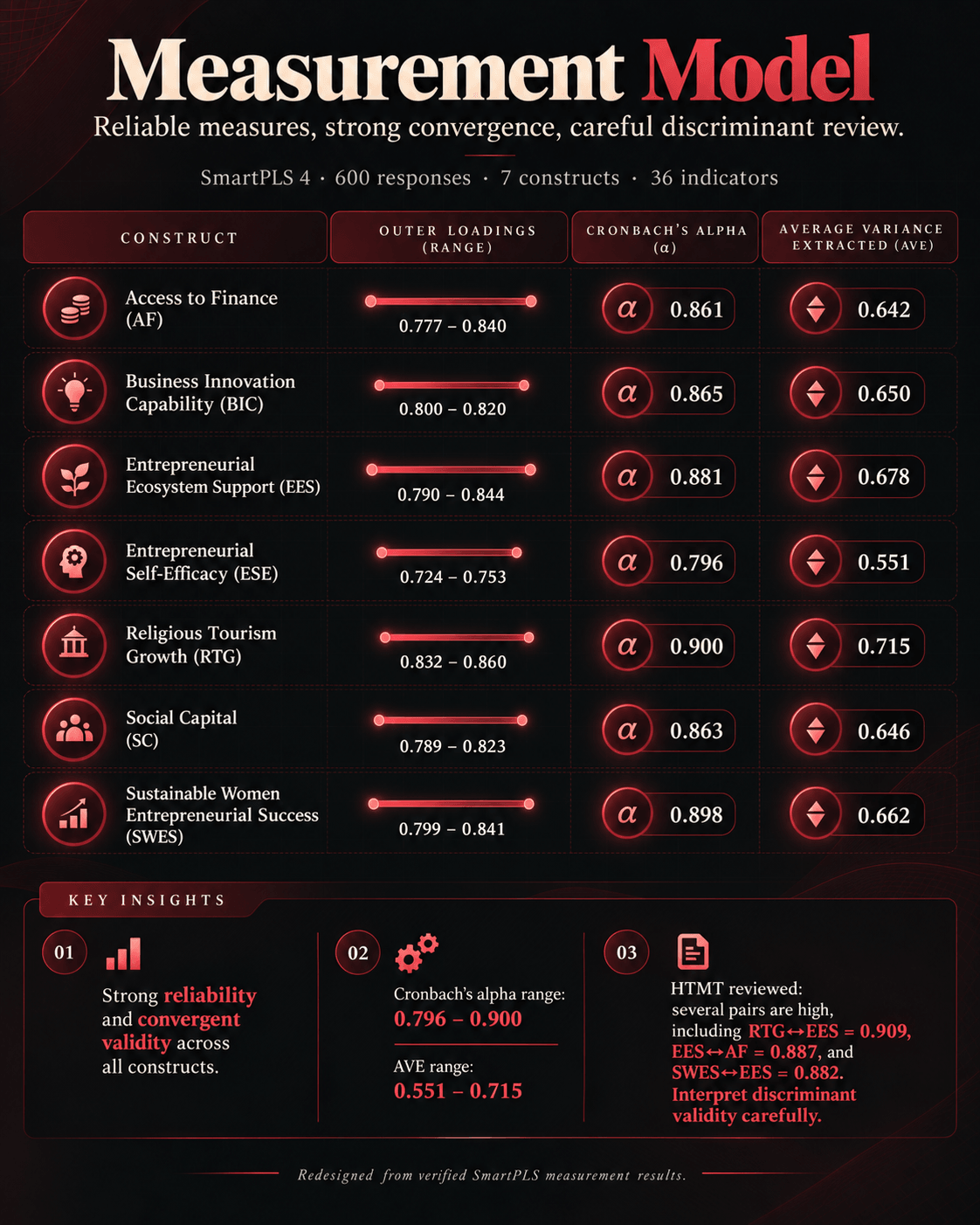
Cronbach's alpha ranged from about .796 to .900 and AVE from .551 to .715. Some construct pairs showed high HTMT values, including .909 between religious tourism growth and ecosystem support, so discriminant validity is interpreted cautiously rather than treated as settled.
03Structural model
One strong upstream driver
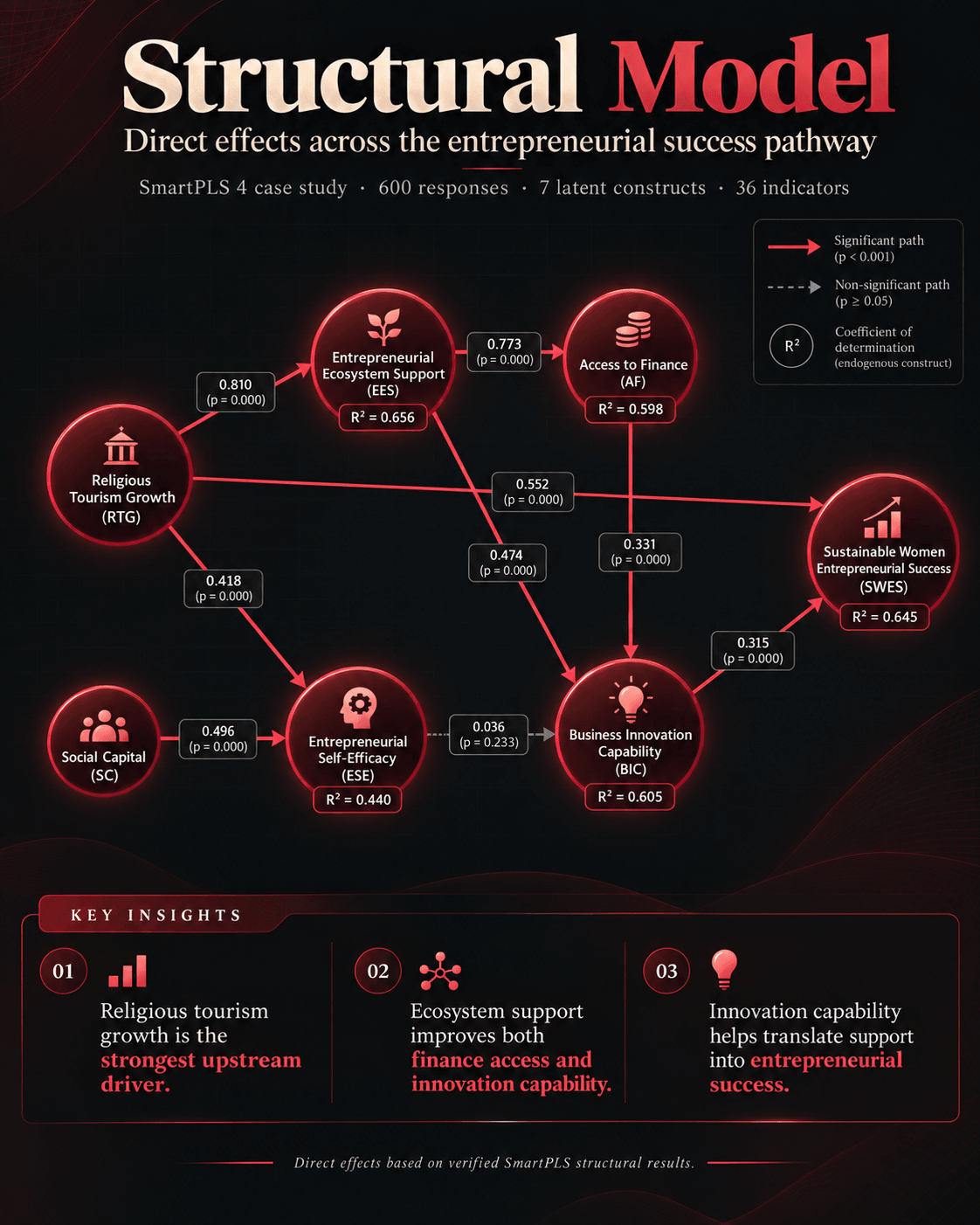
Religious tourism growth had the largest direct effects: on ecosystem support (.810), on self-efficacy (.418) and on success itself (.552). Ecosystem support fed access to finance (.773) and innovation capability (.474), and innovation capability fed success (.315). Self-efficacy did not significantly predict innovation capability (.036, p = .233).
04Mediation
Where the influence travels
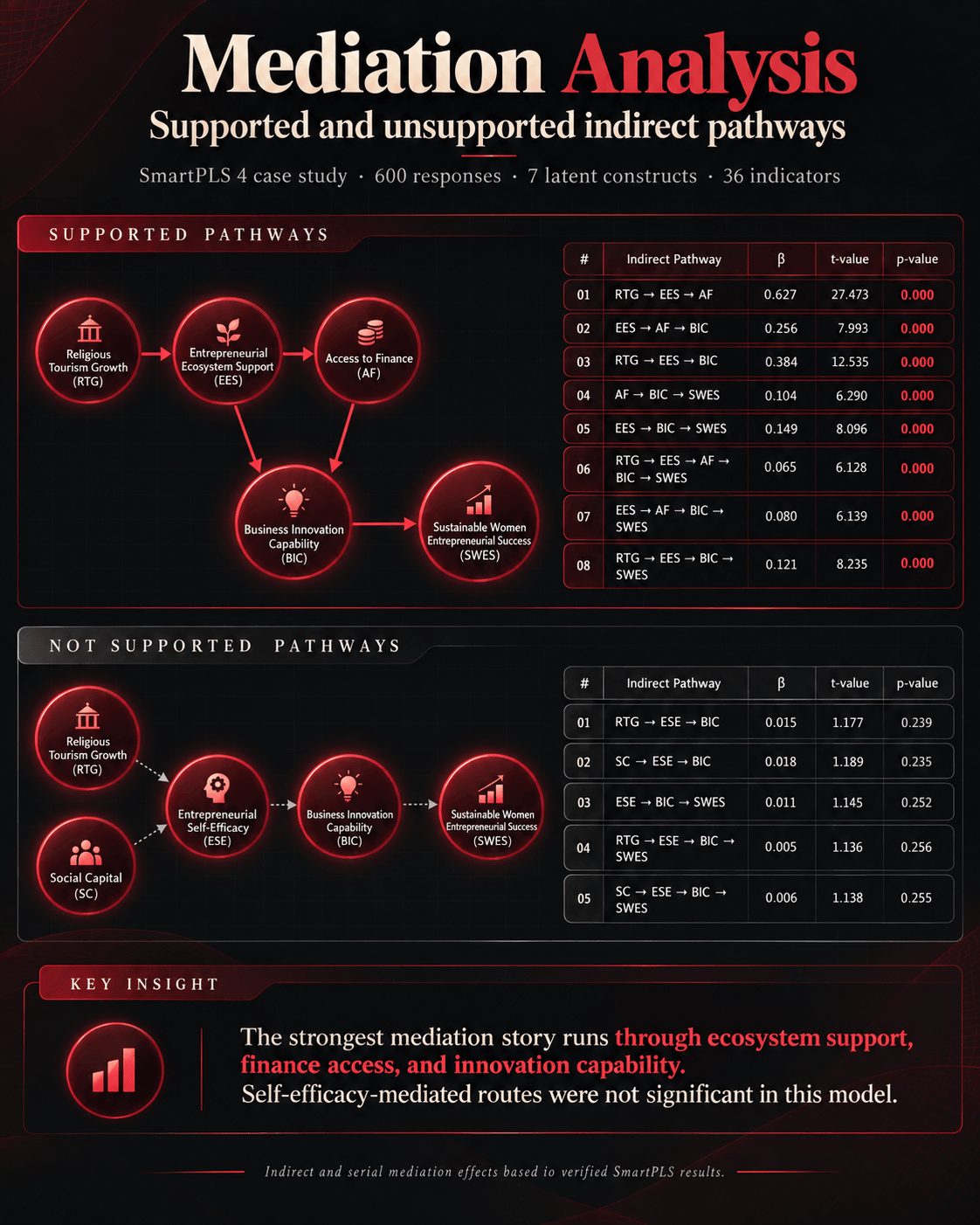
The strongest indirect route ran from religious tourism growth through ecosystem support to access to finance (.627). The full serial pathway to success was small but significant (.065). Routes through self-efficacy were not supported.
05Explanatory power
How much the model explains
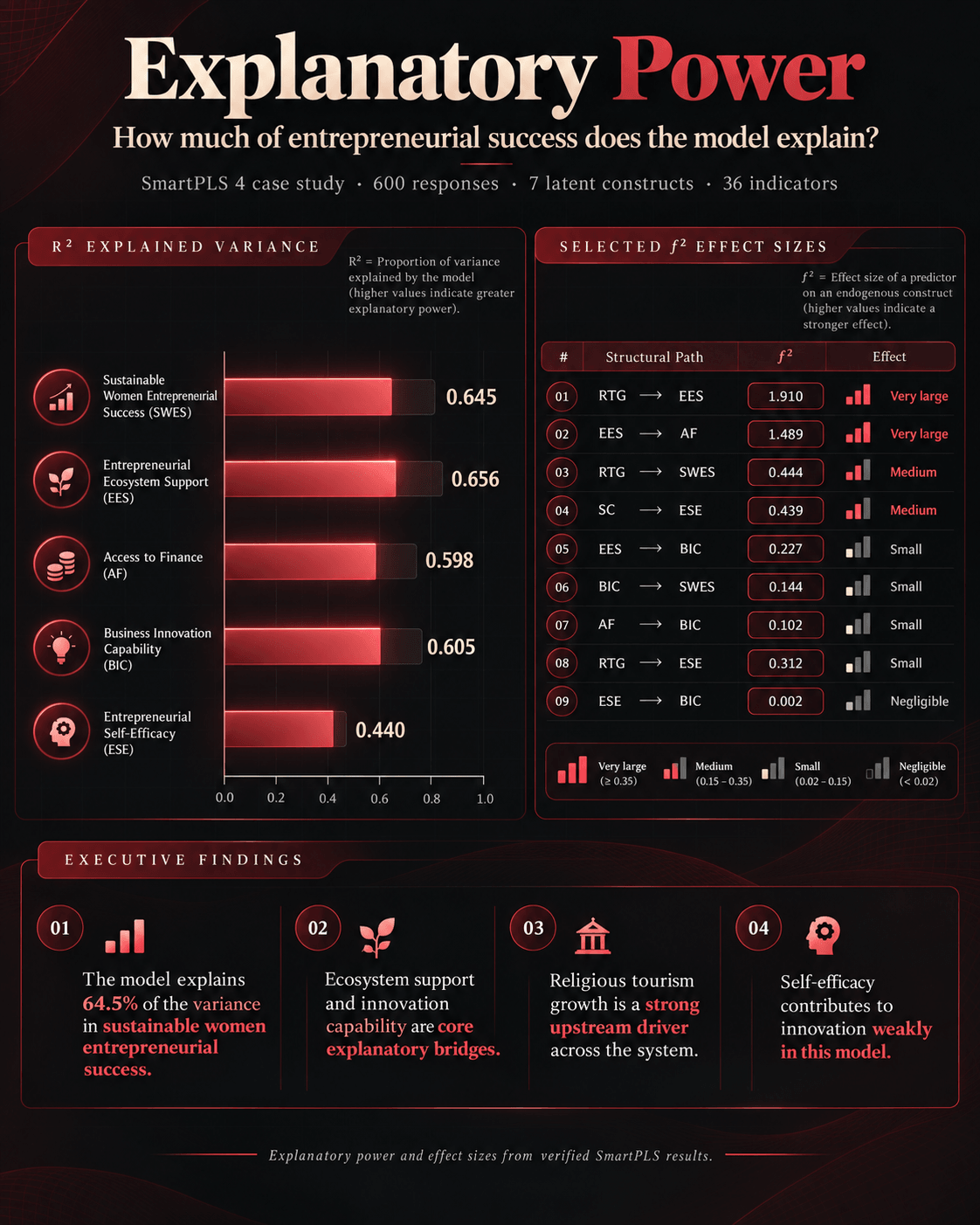
R² reached .645 for sustainable women entrepreneurial success, with .656 for ecosystem support, .605 for innovation capability, .598 for access to finance and .440 for self-efficacy.