Organization & researchSmartPLS 4 · PLS-SEM
Why Do Merchants Continue Using bKash's Mobile Financial Service App Despite Alternative Payment Options?
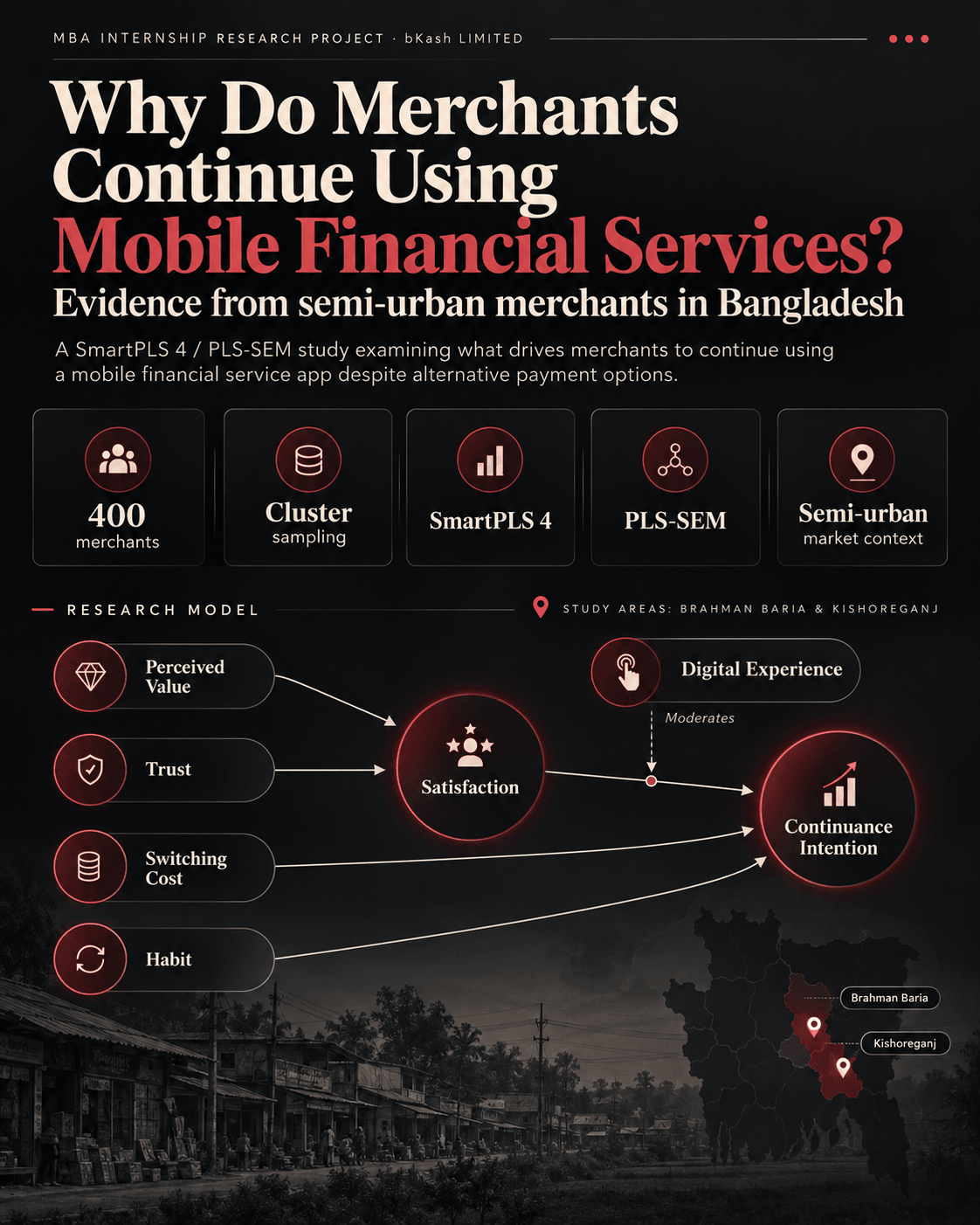
Merchants have alternatives, yet many keep using the same mobile financial service app. A PLS-SEM study of 400 semi-urban merchants examines why.
- Organization context
- bKash Limited · MBA internship research
- Role
- MBA internship research using PLS-SEM. This research is separate from the later Territory Executive (Merchant Development) role at bKash Limited.
- Type
- Professional work
- Status
- Completed research
- Tools
- SmartPLS 4 · PLS-SEM · Survey research
- Merchants
- 400
- Context
- Semi-urban
- Constructs
- 7
- Model fit
- SRMR .034
Case study
01Framework
Seven constructs
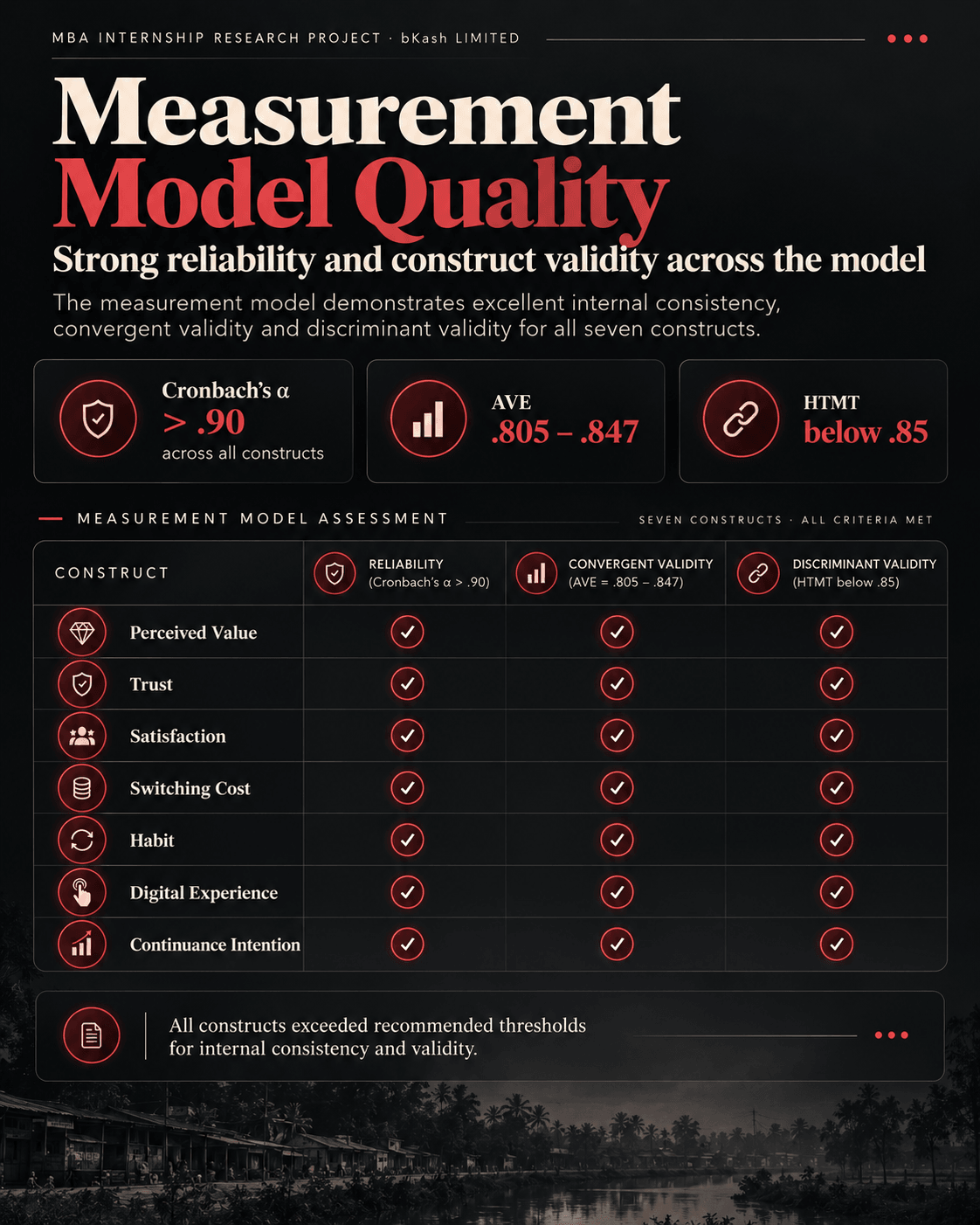
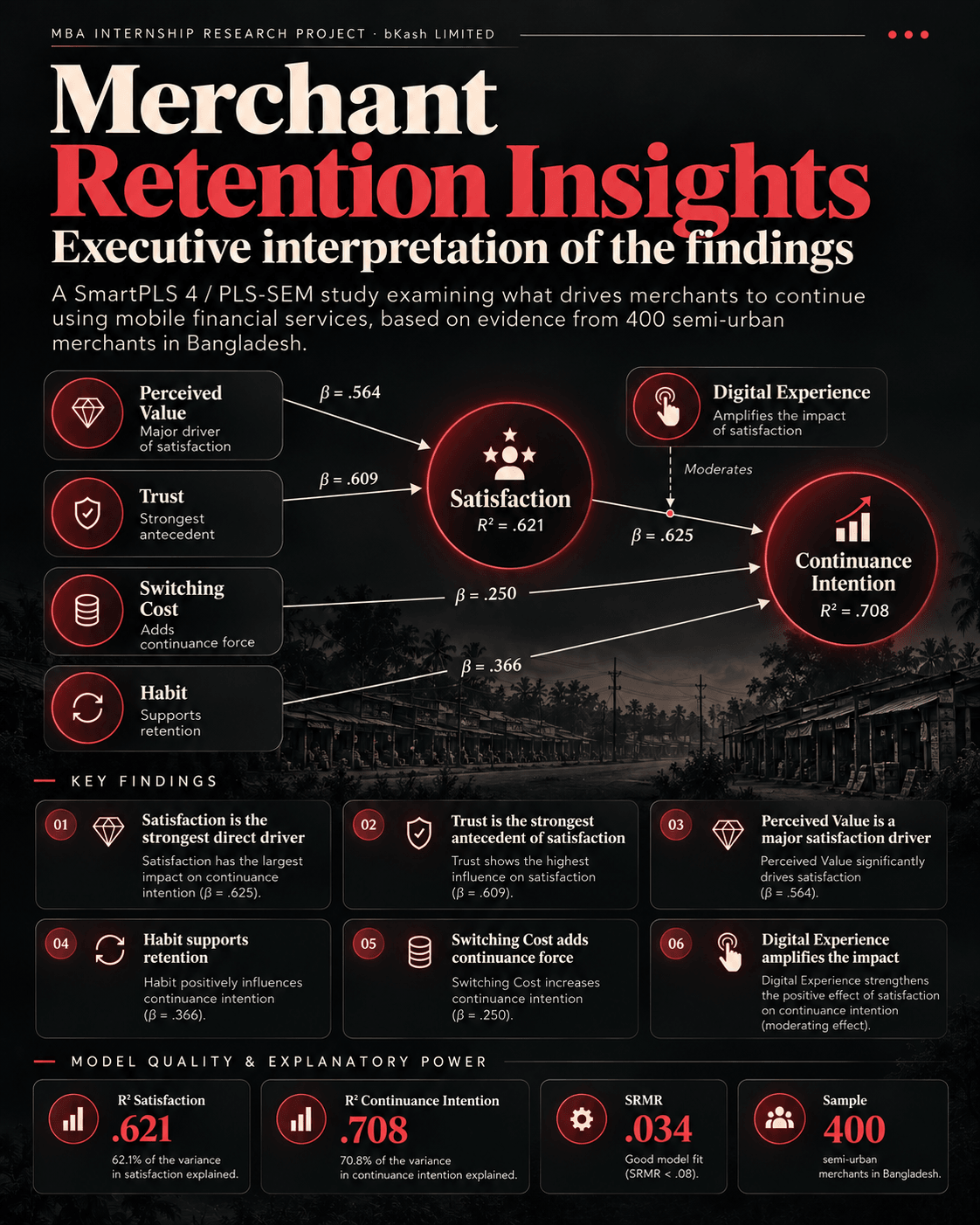
Perceived value and trust were modeled as drivers of satisfaction; satisfaction, habit and switching cost as drivers of continuance intention; and digital experience as a direct predictor and a moderator. Measurement quality was strong overall.
02Drivers
Satisfaction was the strongest direct driver
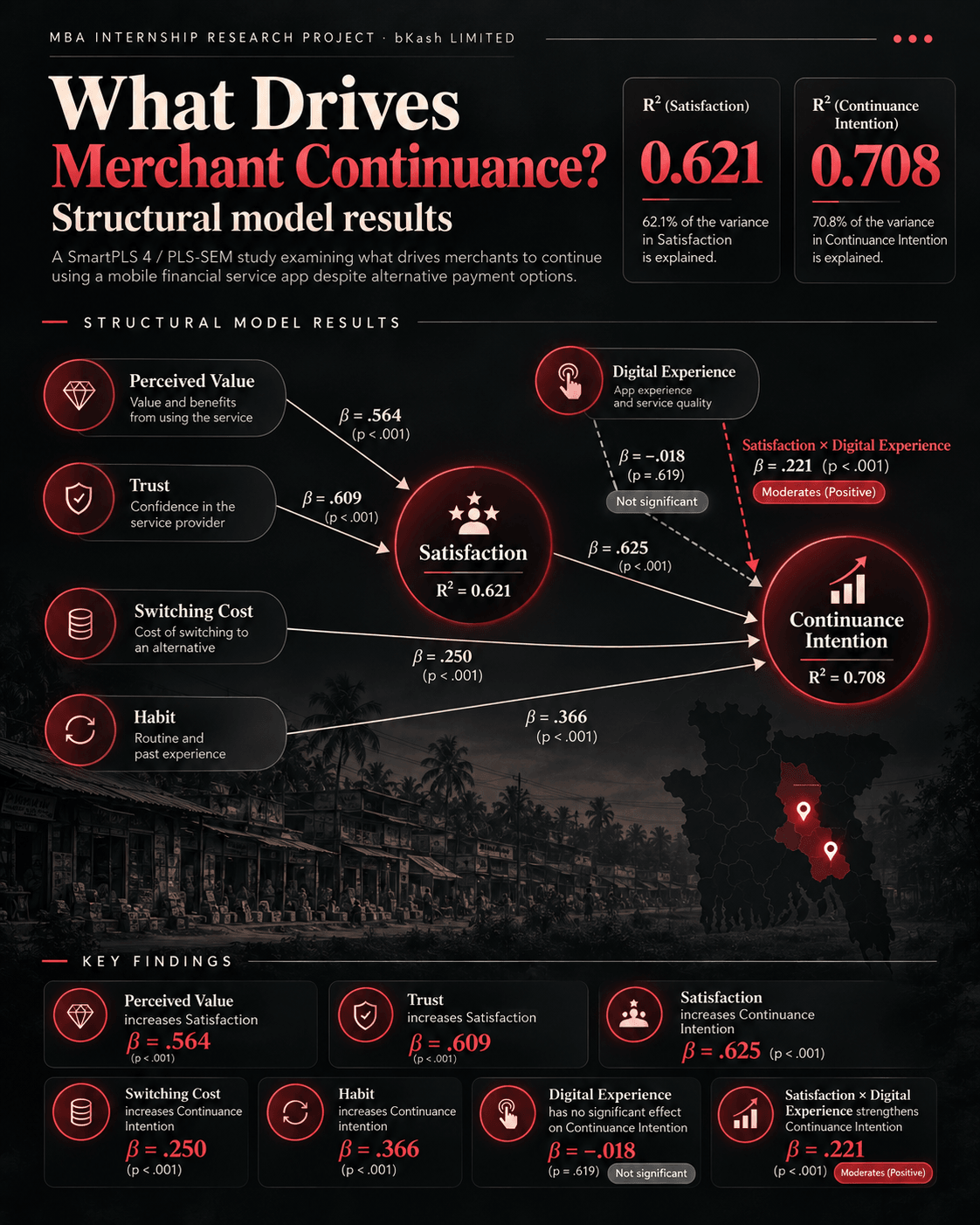
Trust (.609) and perceived value (.564) predicted satisfaction; satisfaction (.625), habit (.366) and switching cost (.250) predicted continuance. Digital experience had no significant direct effect (β = −.018, p = .619).
03Mechanism
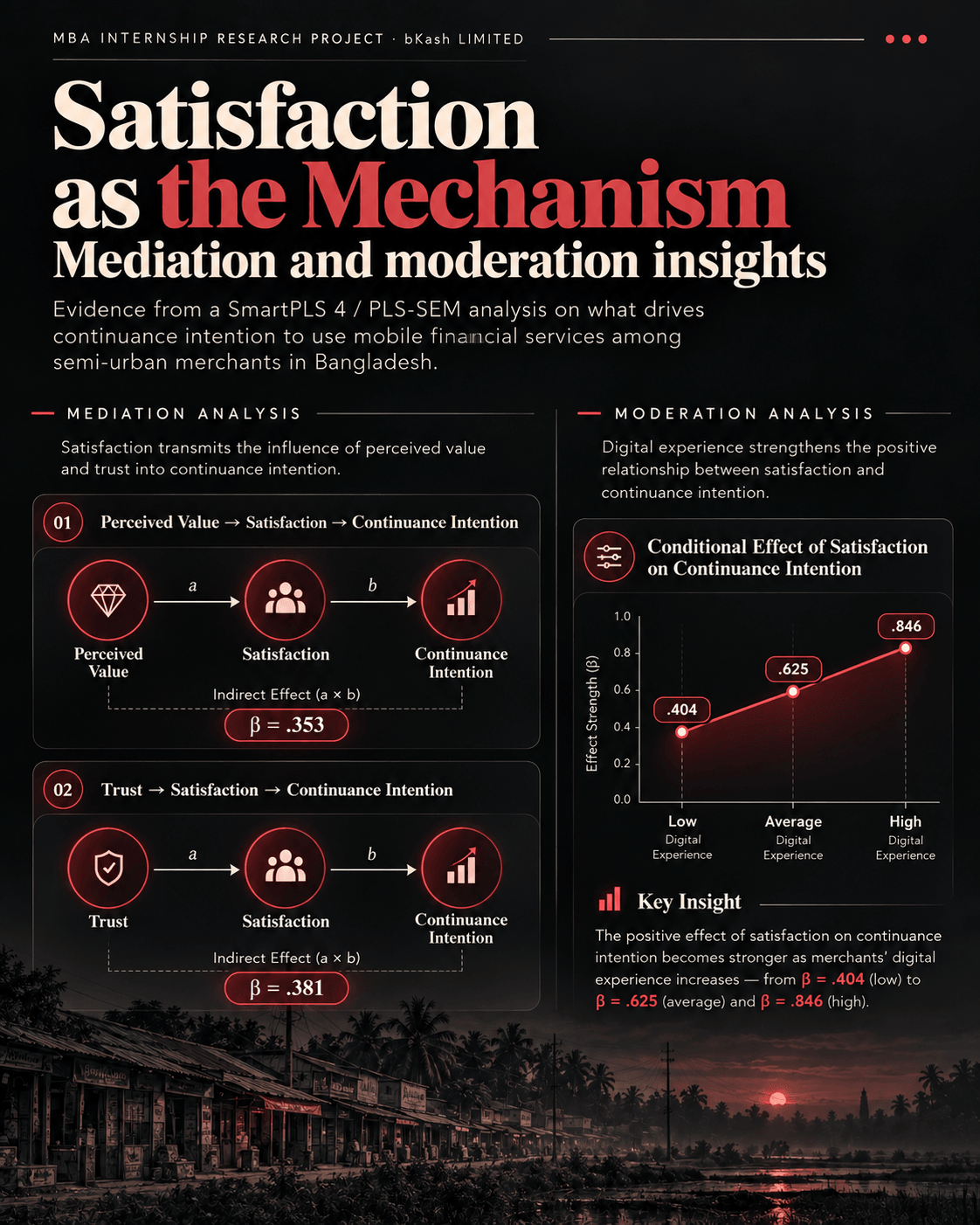
Satisfaction carries value and trust
Satisfaction mediated the effects of perceived value (.353) and trust (.381). Digital experience strengthened the satisfaction–continuance link (interaction β = .221, p < .001): the conditional effect rose from .404 at low digital experience to .625 at average and .846 at high.
View full size: Mediation and moderation (opens in a new tab)
04Explanatory power
A well-fitting model
The model explained 62.1% of the variance in satisfaction and 70.8% in continuance intention (R² = .621 and .708), with SRMR = .034.
View full size: Merchant retention insights (opens in a new tab)